Why Oversite
What we cover Case study Security & data Procurement Moving across Support Roadmap Book a demoChildren & families
Enrolments & attendance Enquiry to roll call, one record The guardian portal Journal, invoices and consents Learning & records Te Whāriki entries, media library Daily care Sleep, nappies, absences, excursions Health & medical Plans, medication, allergies Home-based services Schedule 1A, educators, coordinatorsCompliance & safety
Ratios & funding Schedule 2, RS7, ECE Census Hazards & incidents Registers, drills, HSWA evidence Governance & quality ERO cycles, consultation, checklists Reports 72 built in, across thirteen areas Automation & setup 26 daily checks, your wordingRunning the organisation
Staff & rosters Records, pay parity, costed rosters Hiring & recruitment Vacancies, careers page, safety checks Billing & payments Invoices, bonds, late fees Property & assets Sites, equipment, fleet Contractors & works Jobs, projects, vetting Portals & kiosks Sign-in tablets for every door Seeing your day Dashboard, tasks, messagesWhat it covers
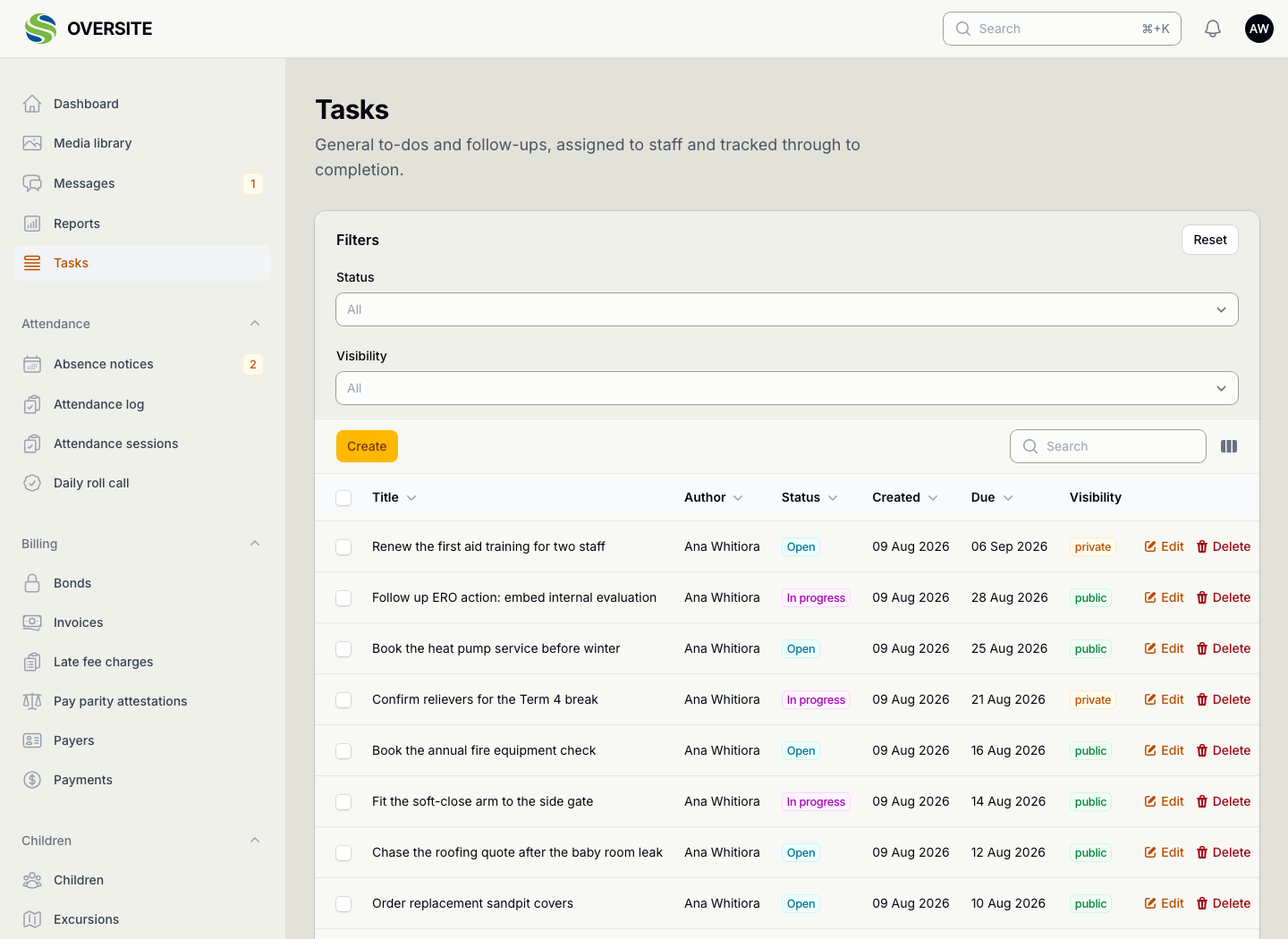
Records are only half of it. The other half is knowing what needs attention this morning across every site, without opening eleven screens to find out.
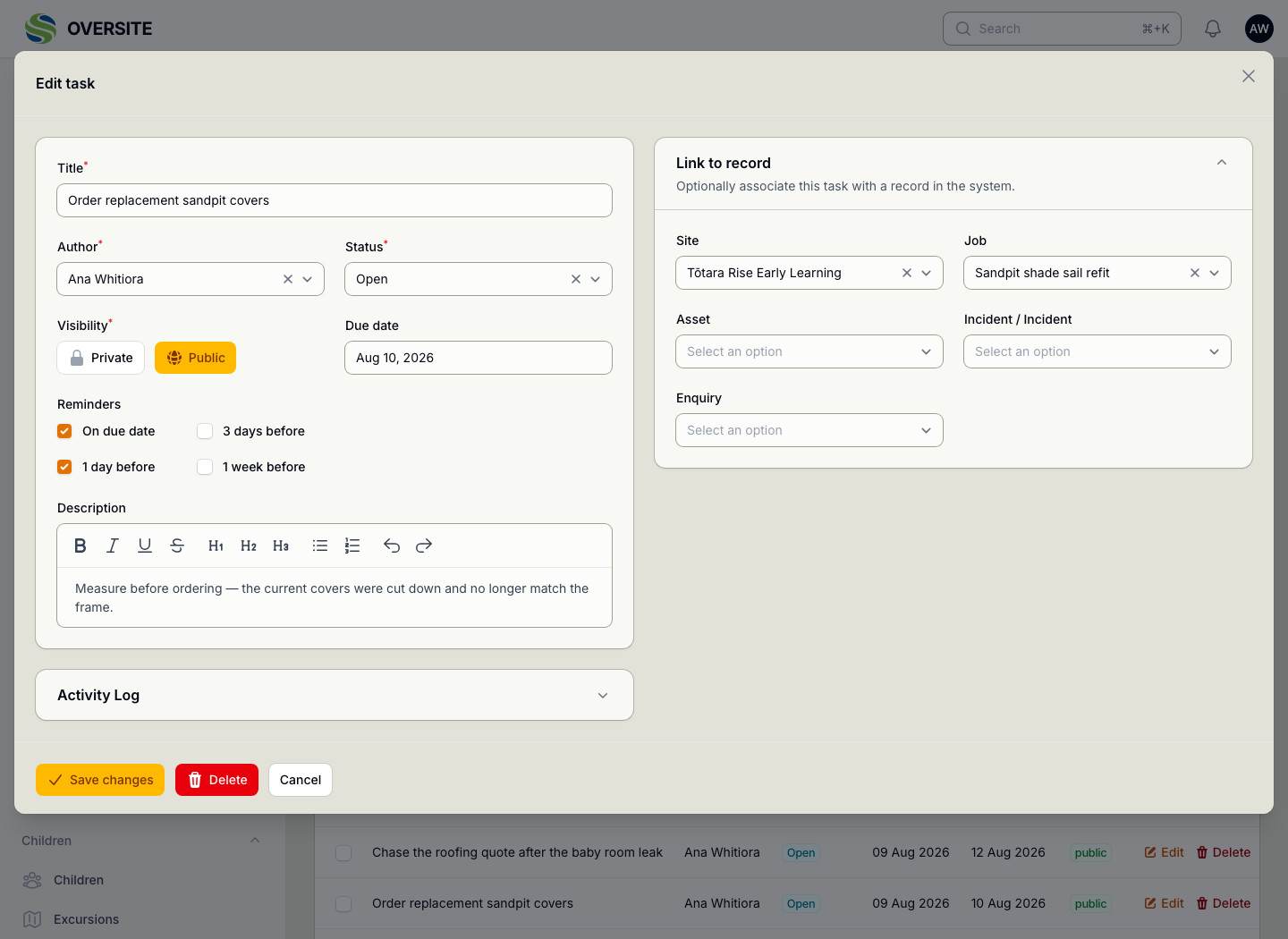
A task can be linked to the thing it concerns: the job it follows up, the incident it came out of, the enquiry waiting on an answer. Opening the task takes you to the record rather than to a description of it.
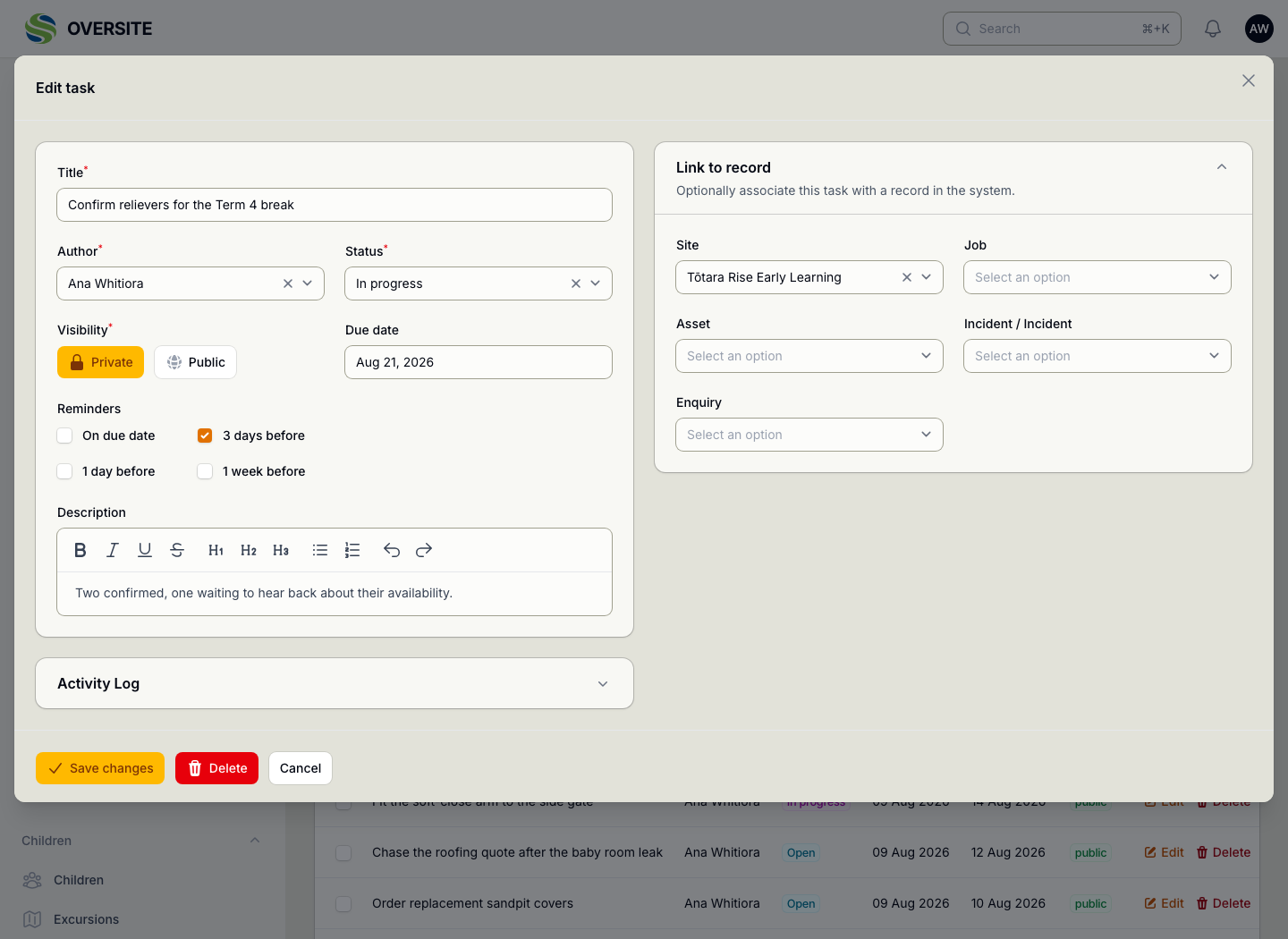
Reminders fire ahead of the due date, so the follow-up that matters is raised while there is still time to do it.
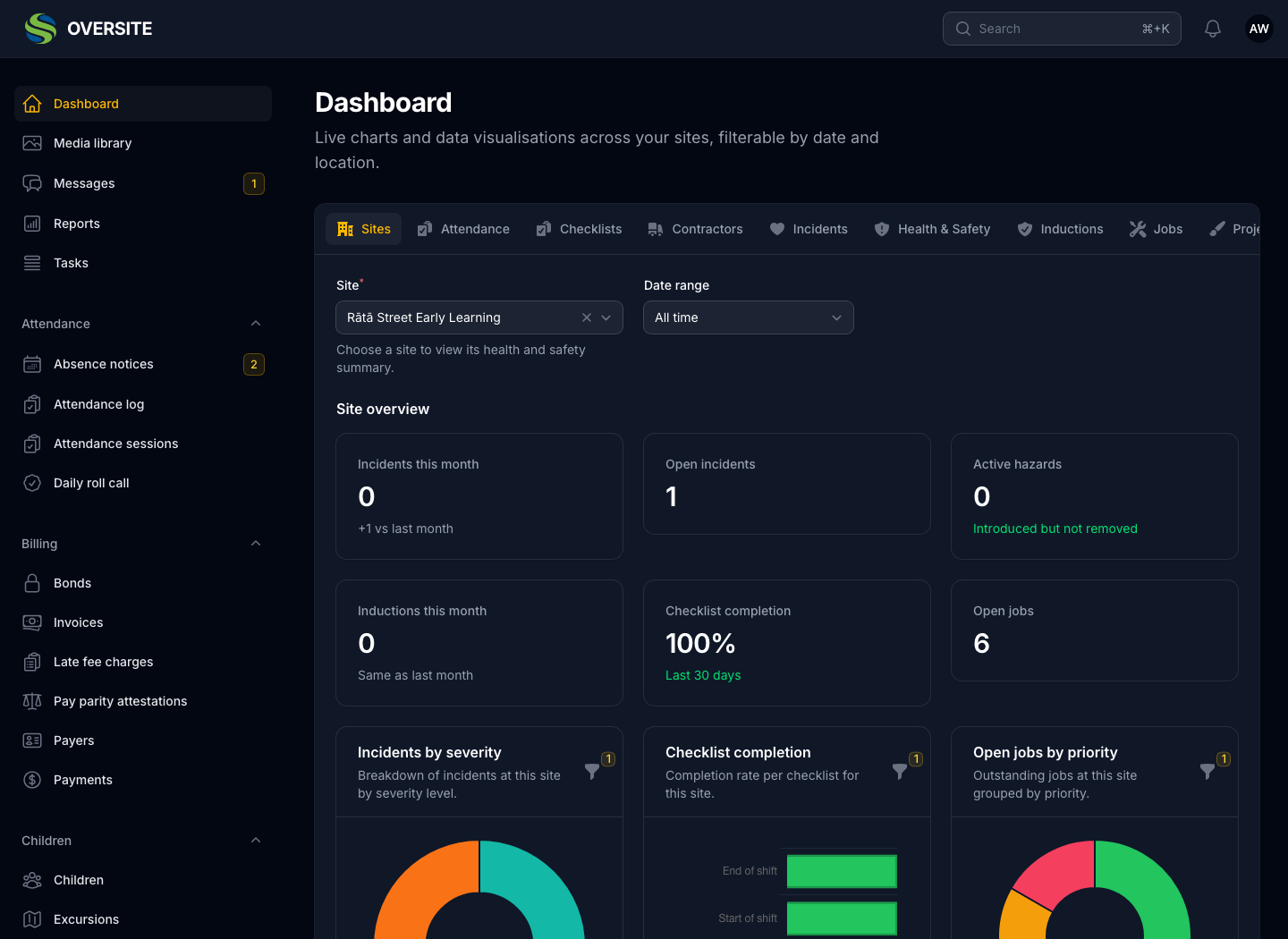
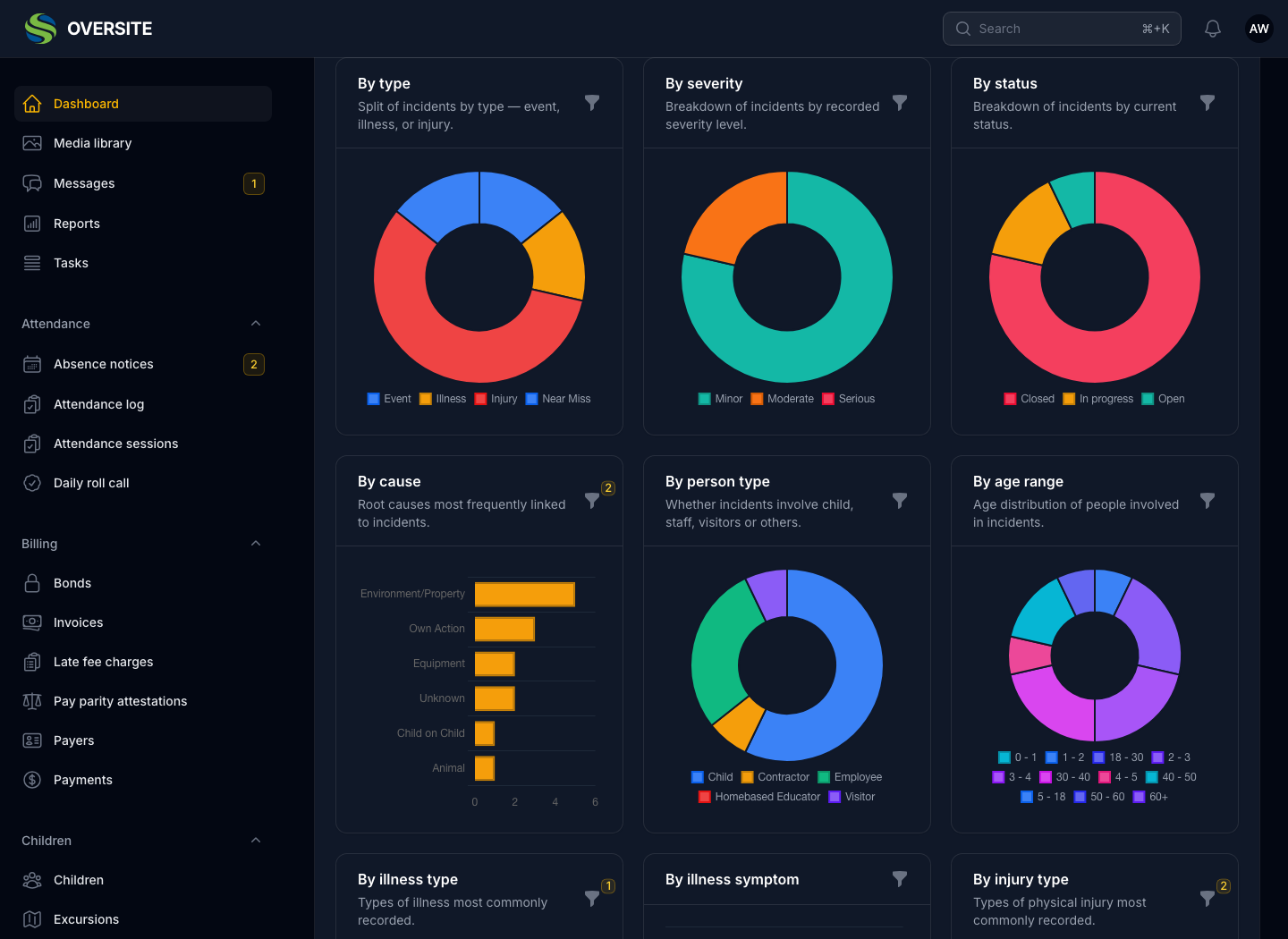
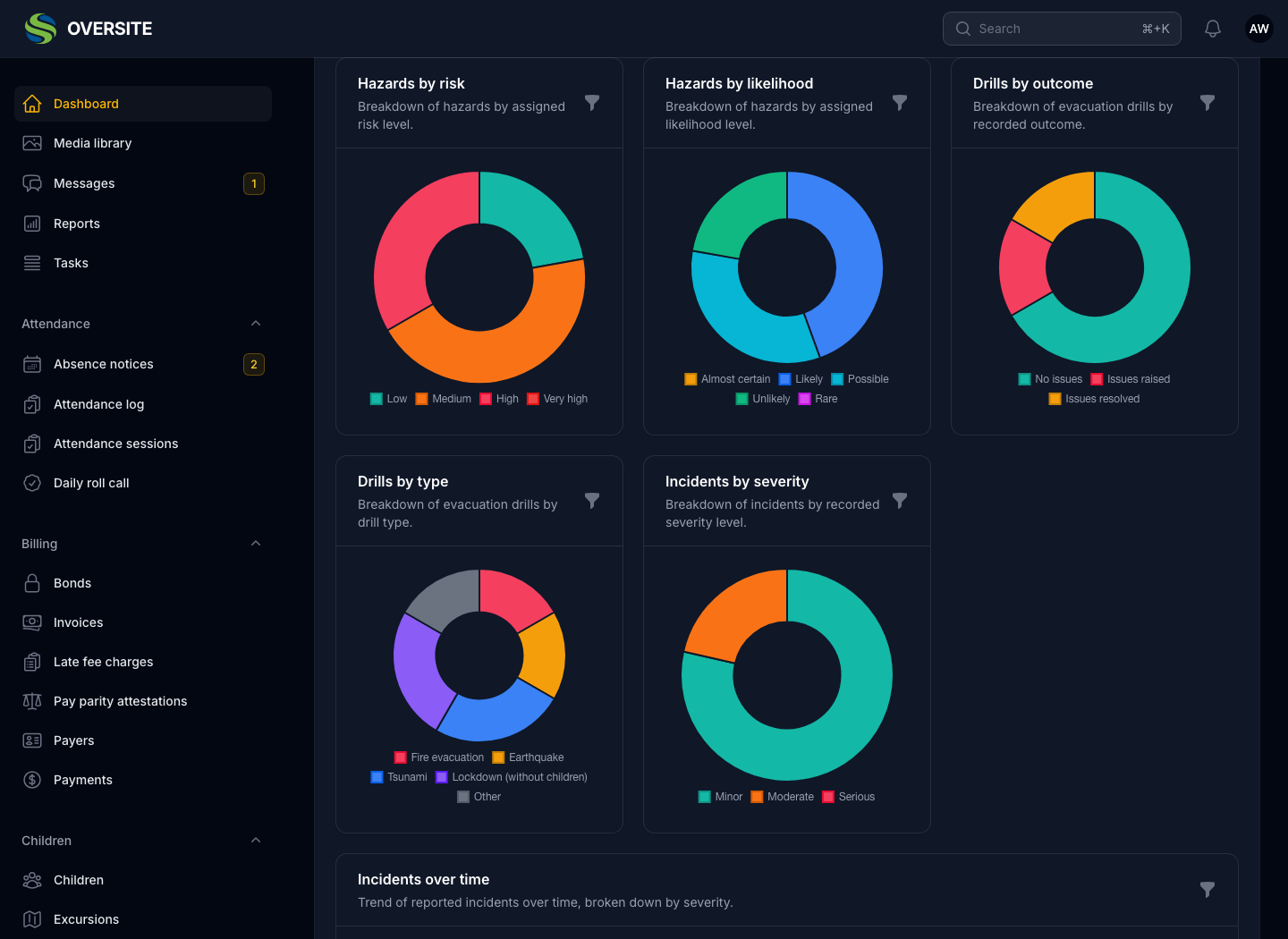
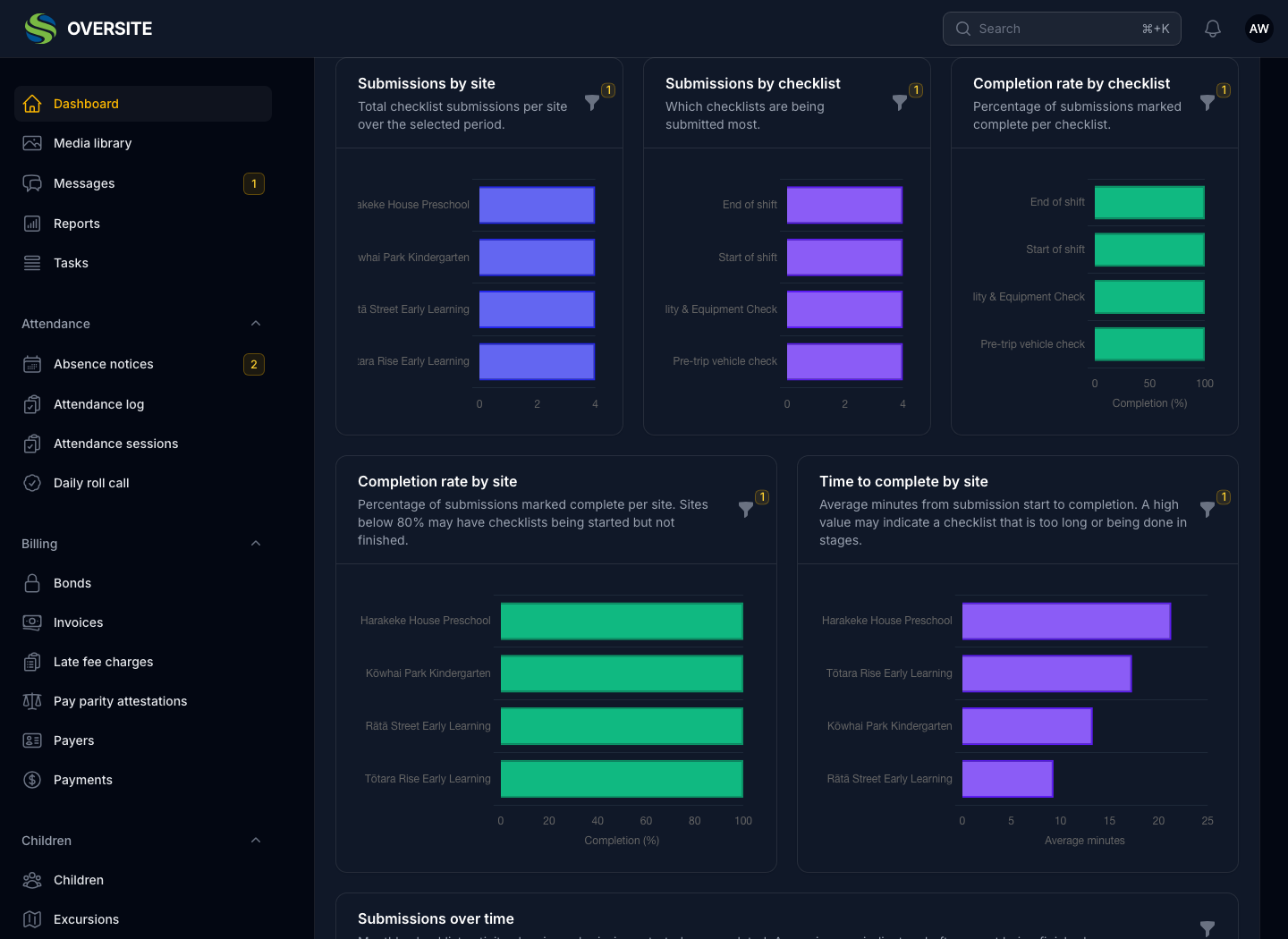
The dashboard puts the state of the organisation in one place, split into tabs for each area and filterable by site and period. Somebody running four centres can see all four without opening four sets of screens.
Each tab respects the same permissions as the module behind it, so what a person sees on the dashboard matches what they can reach everywhere else.
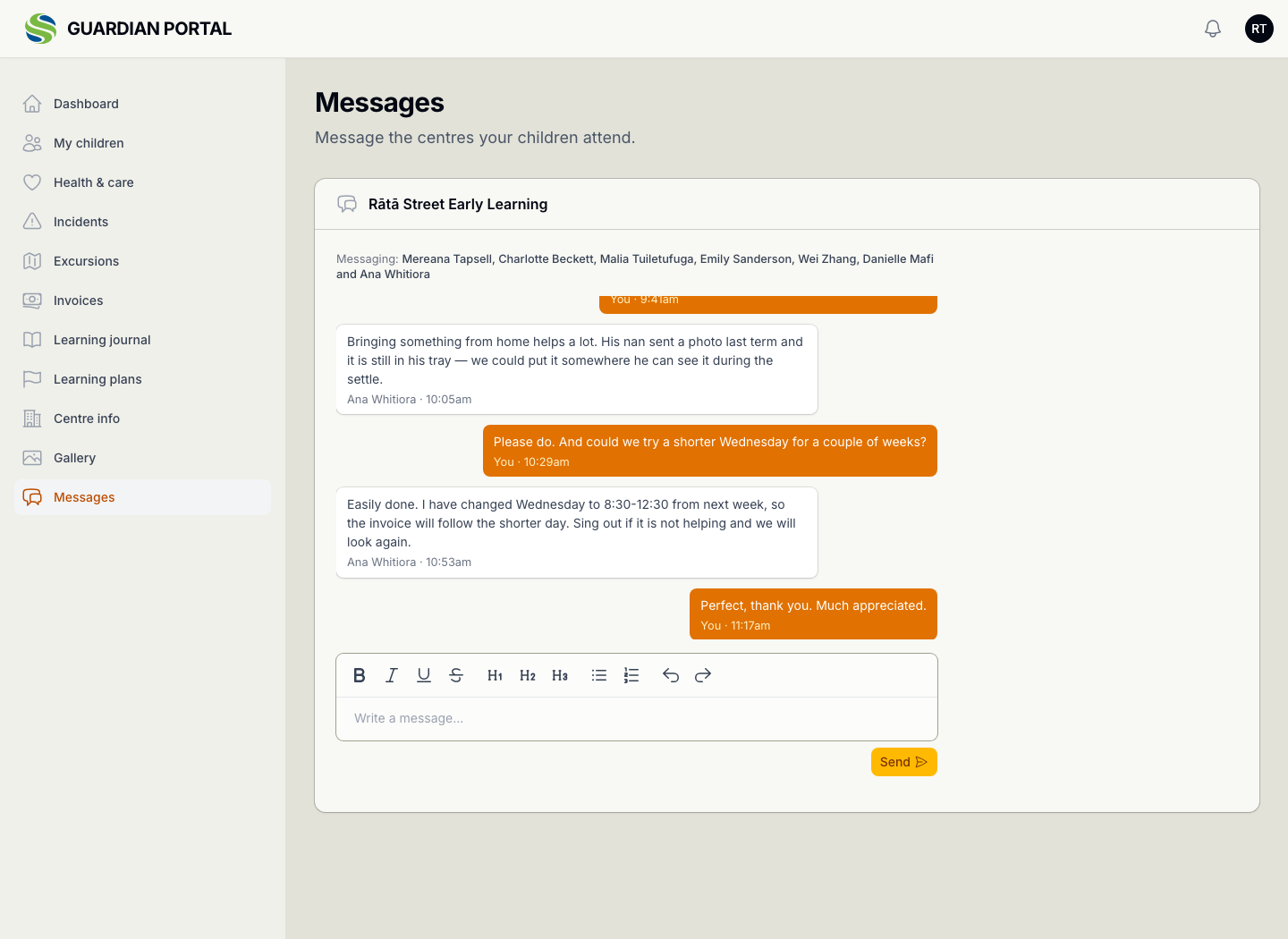
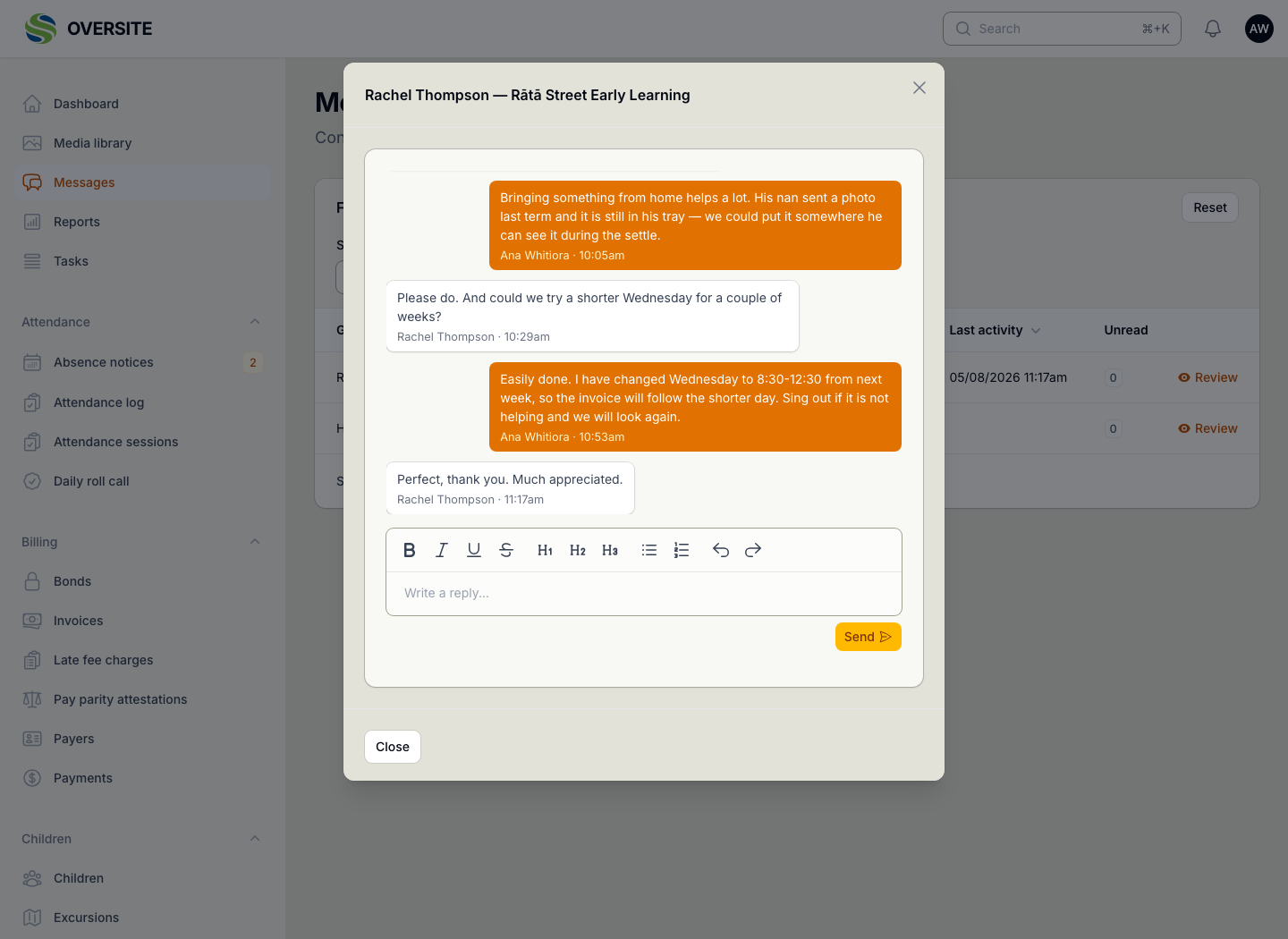
A change to a booking, a note about a pair of gumboots, a question about fees: all of it arrives in a thread attached to the family rather than in somebody's text messages or a note passed on verbally.
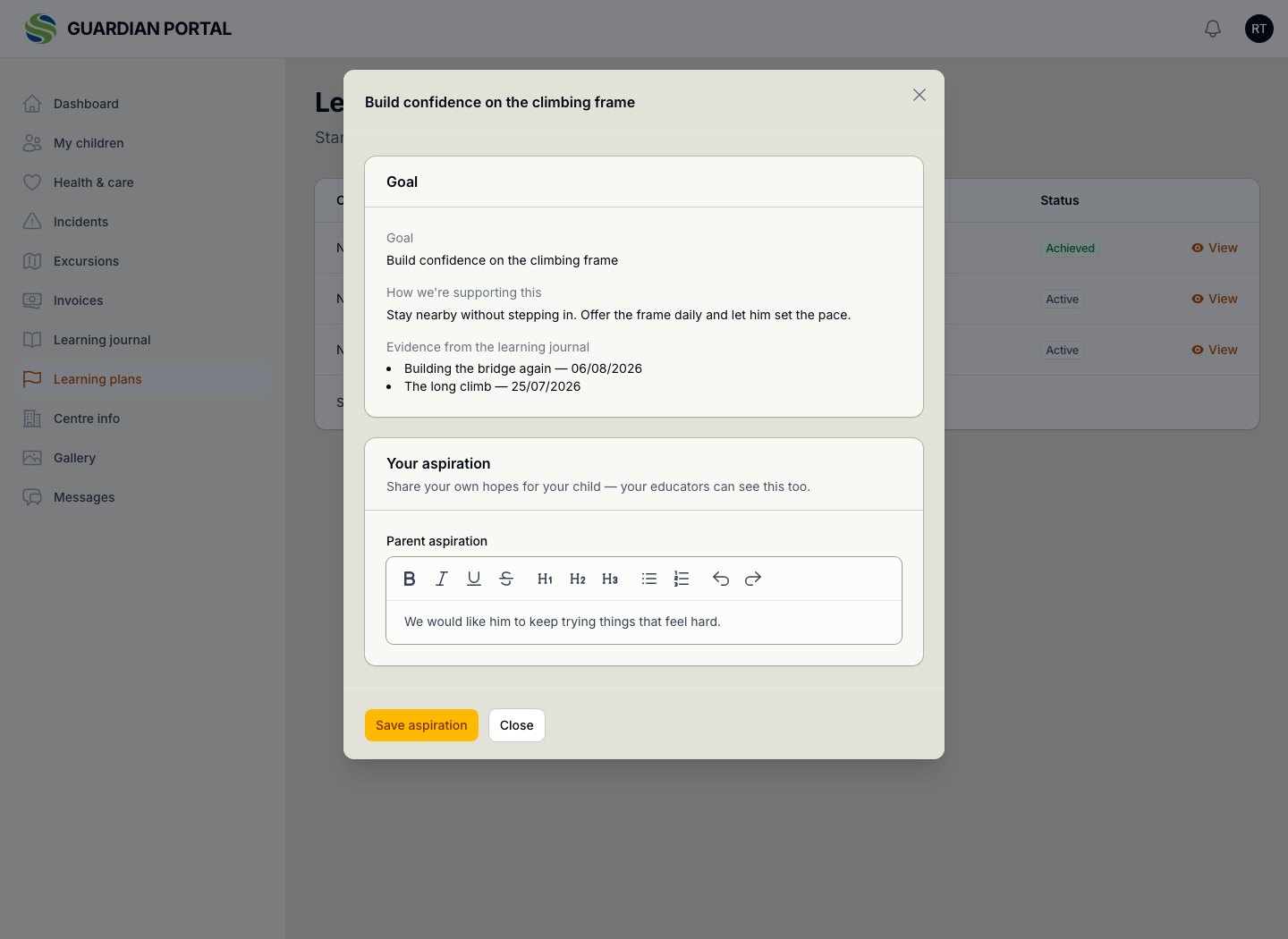
Drag the handle to see the same conversation from the other side. The family sees who at the centre can read it, which is the difference between messaging an organisation and messaging a person's phone.
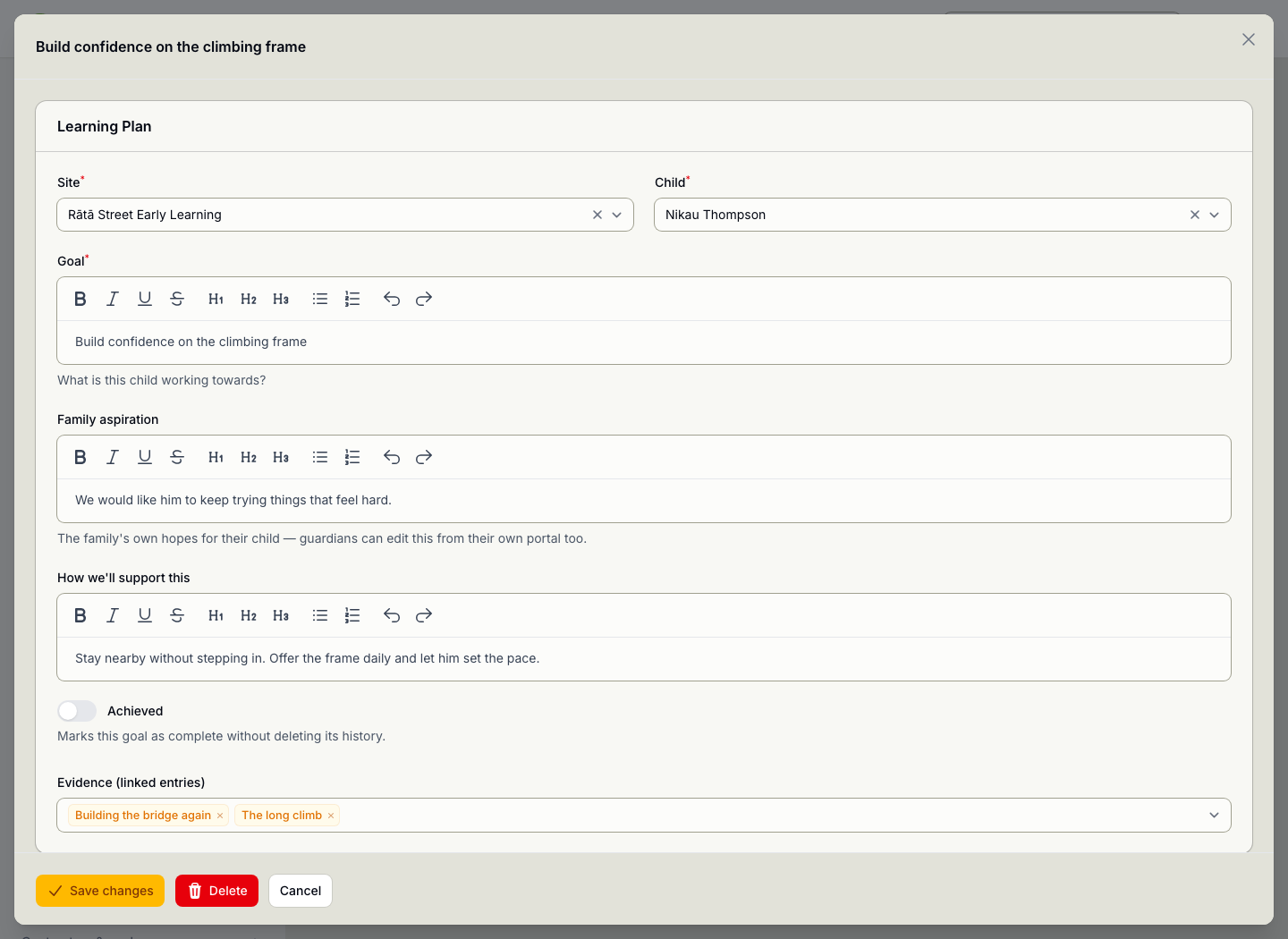
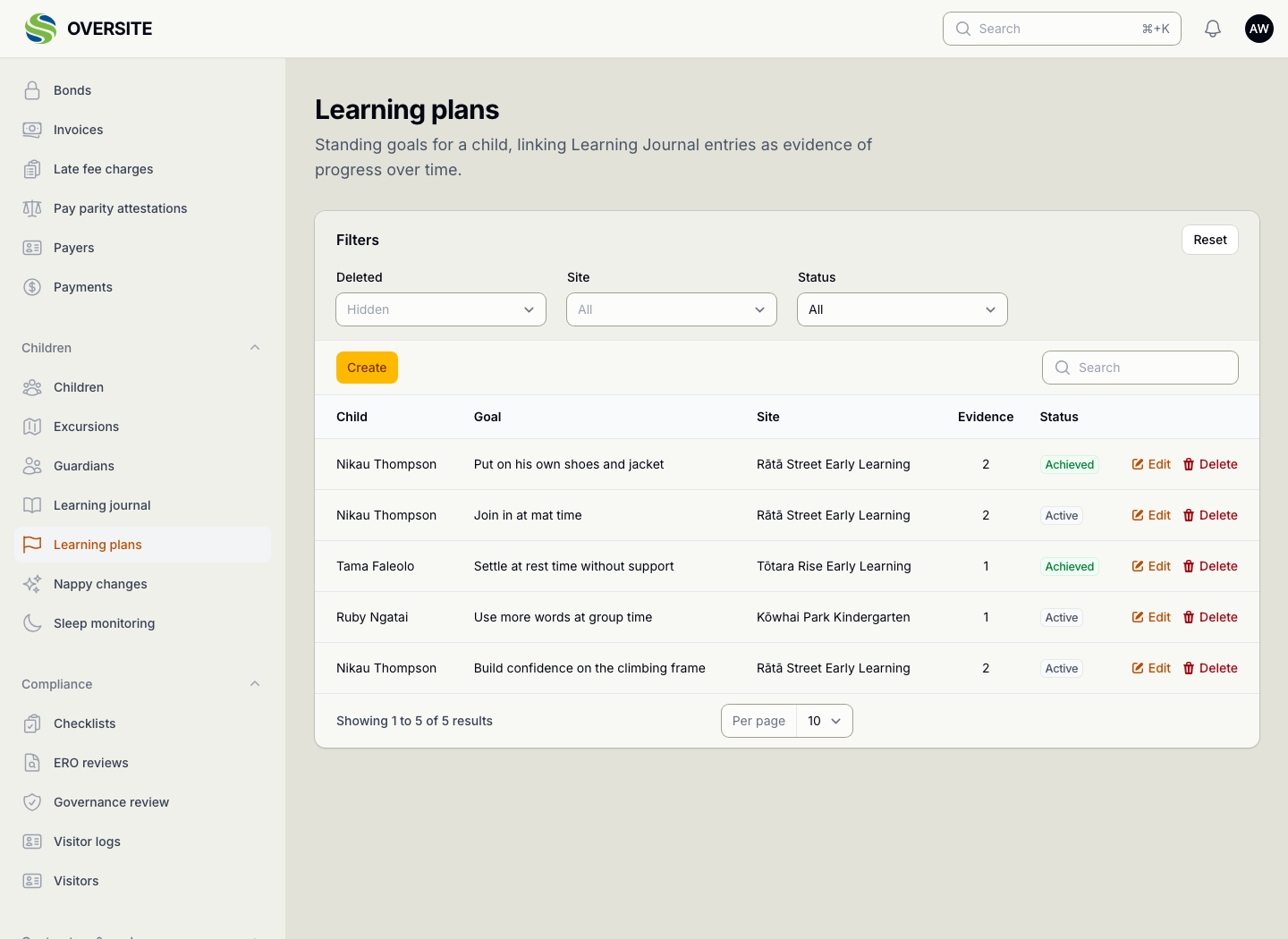
A learning plan is the forward half of the journal: what you are working towards with a child, agreed with their family rather than decided for them.
The family's aspiration is recorded in their own words alongside what educators will do about it, and they can open the plan themselves, which is what makes the next conversation a continuation rather than a restart.
Tell us how many sites you run and what you're using now, and we'll show you the parts that matter most to you. No obligation, and you'll hear back within one working day.
Book a demo