What it covers

Evidence that you're running it well

Compliance shows you met the rules. Governance shows you were paying attention, with review cycles tracked, decisions consulted on before they took effect, and checks completed and recorded rather than assumed.

Know when the next review is due

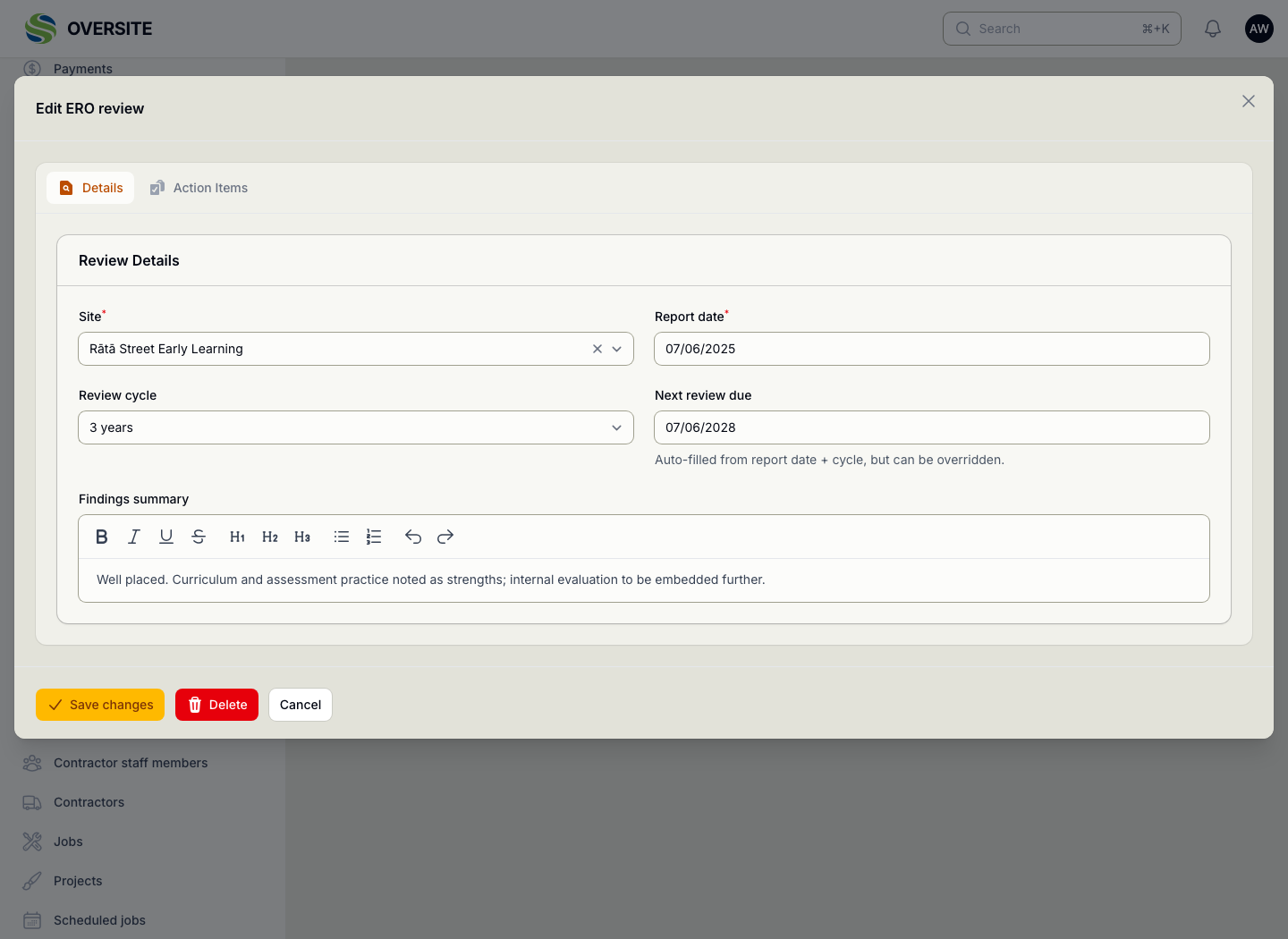
An ERO review is not a one-off. It is a cycle, and the useful question is when the next one falls. Each site records what happened last time, how long its cycle is, and what that makes the next date.

Anything ERO asked you to work on is tracked as an action item, so the follow-up is visible between reviews rather than rediscovered a month before the next one.

  • Last review, cycle length and next due date per site
  • Findings summarised where you can find them again
  • Action items tracked through to done
  • Due dates surfaced rather than waited on
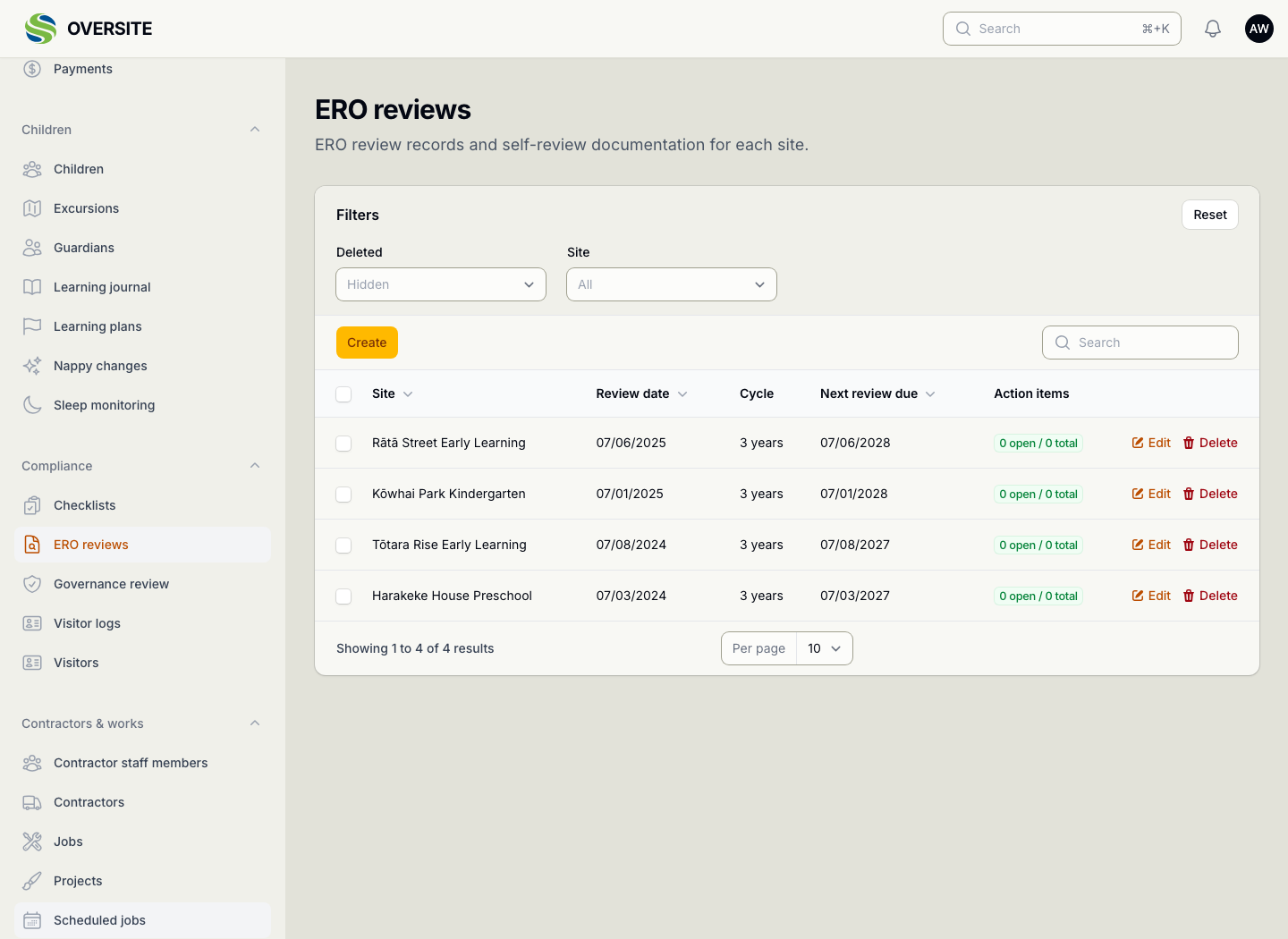
The ERO reviews list showing each site's last review date, its review cycle in years, when the next review falls due, and a summary of the findings. An ERO review open for editing, showing the site, the date of the last review, the length of the cycle, the resulting next-due date and the findings recorded against it.

Decisions your team was consulted on

The Health and Safety at Work Act requires you to engage with workers on matters that affect their health and safety. Meeting that duty is usually straightforward; proving you met it, eighteen months later, is not.

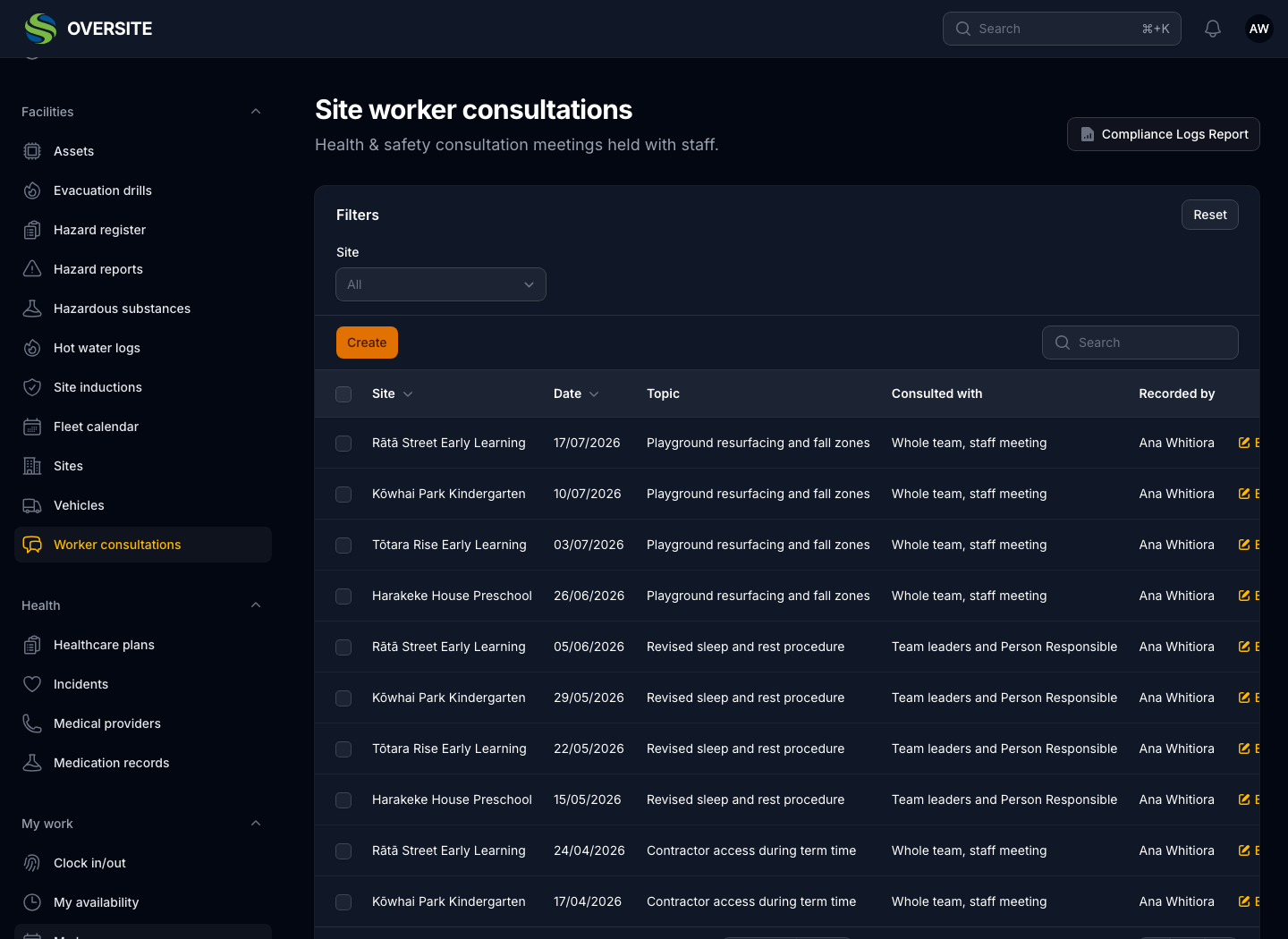
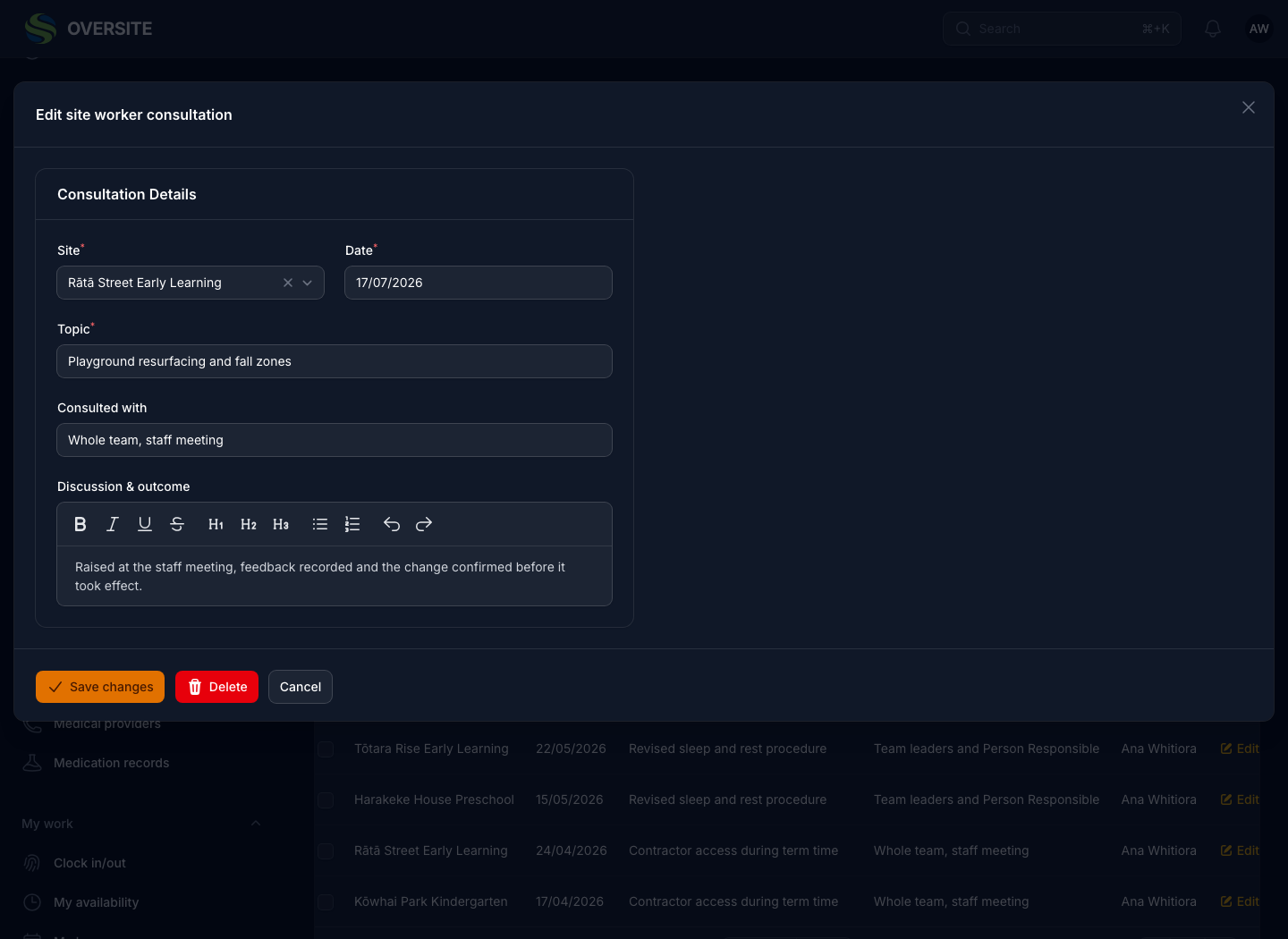
Each consultation records what was discussed, with whom, and when, written down as it happens, which is the only version anyone can rely on afterwards.

  • The topic, the date, and who was consulted
  • Notes recorded at the time, not reconstructed
  • Held per site, so each team has its own record
  • The HSWA 2015 worker participation duty, evidenced
The Worker consultations list in dark mode, showing topics such as playground resurfacing, a revised sleep and rest procedure and contractor access during term time, each with the date, who was consulted and the notes taken. A worker consultation open for editing in dark mode, showing the site, the topic discussed, the date it happened, who was consulted and the notes taken at the time.

Checks done, and recorded as done

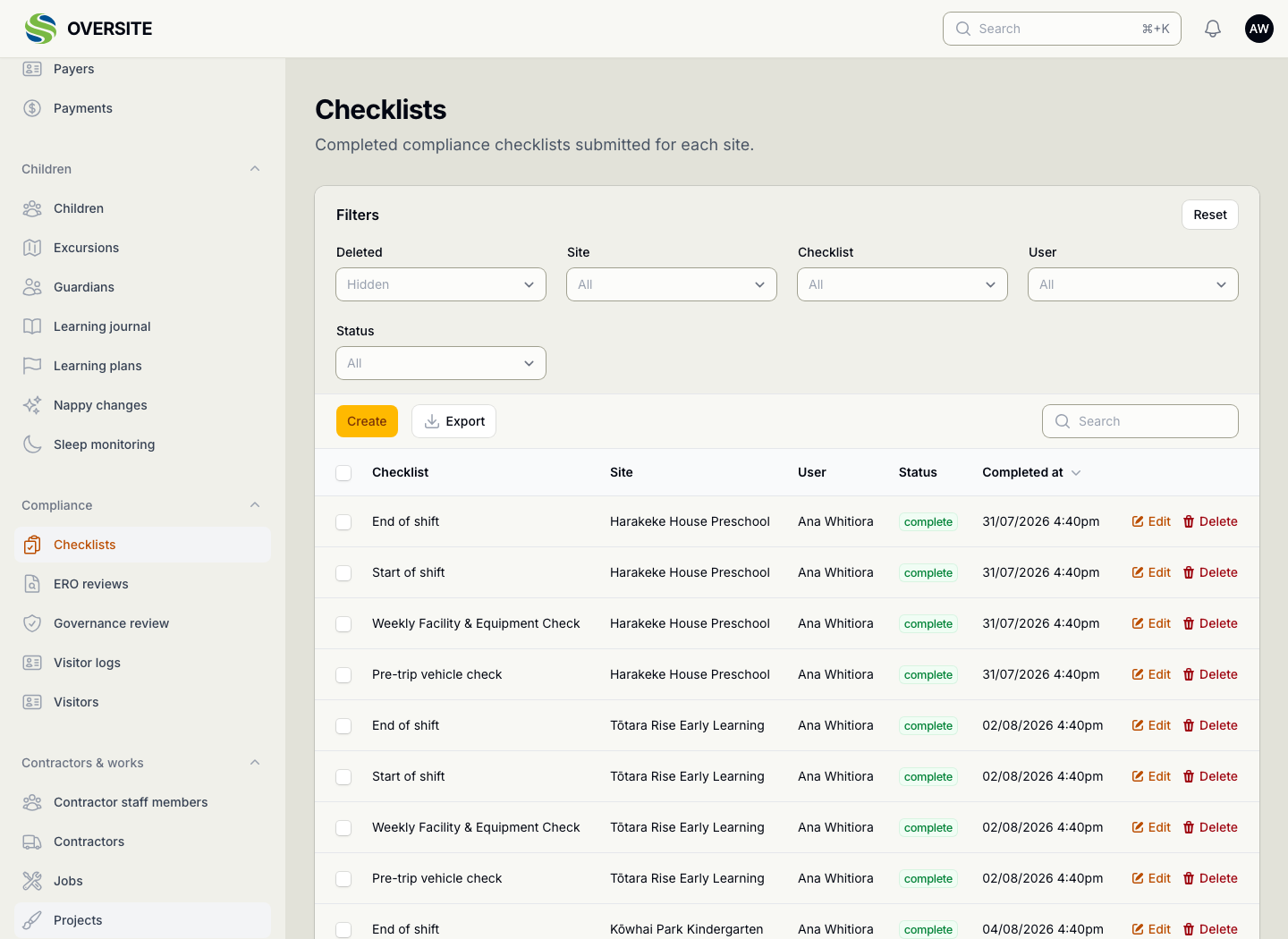
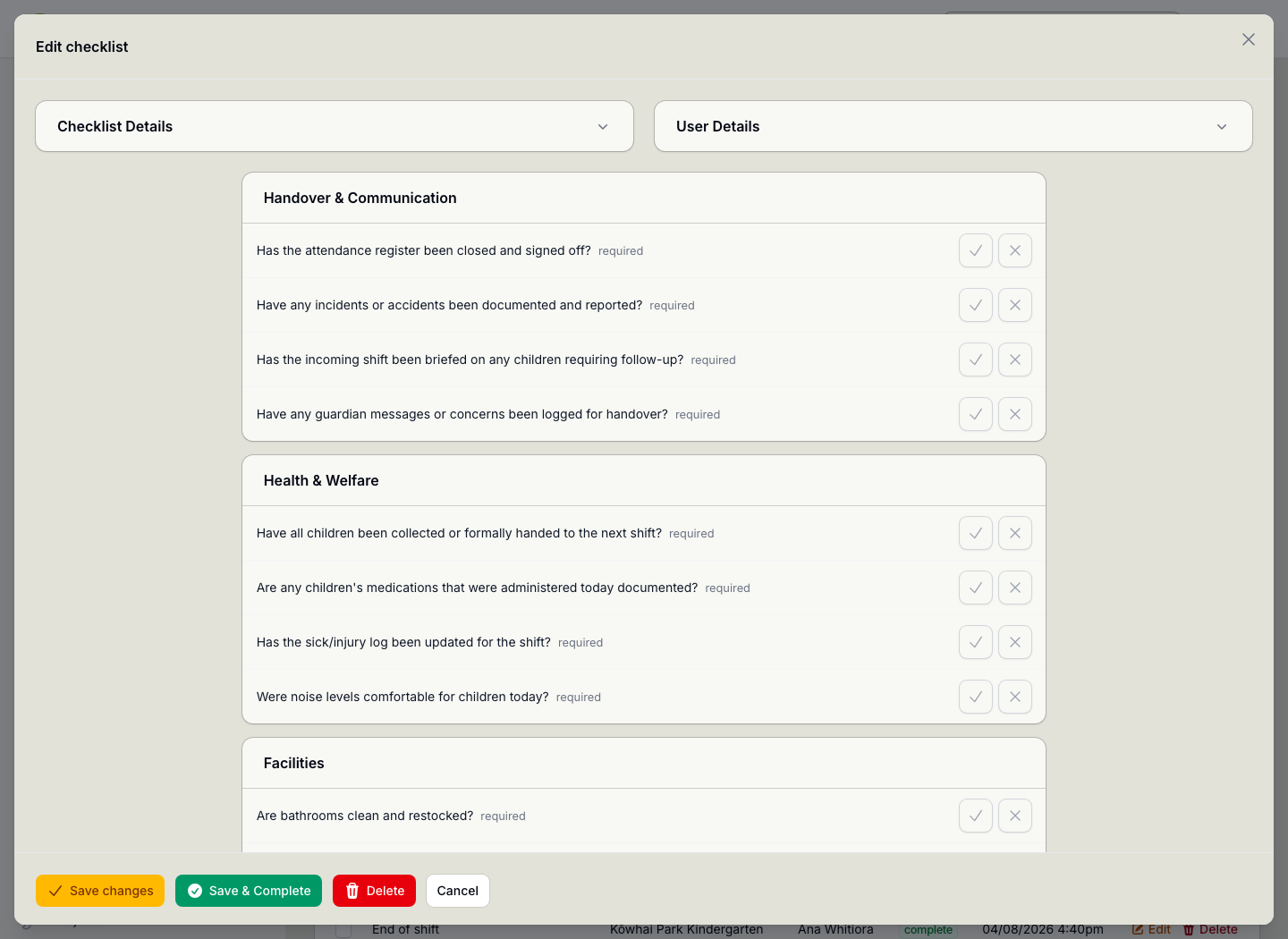
Opening checks, closing checks, playground checks, vehicle checks: the recurring things that are easy to do and easy to leave unrecorded. A completed submission keeps the answers, the person and the time.

Alongside them, internal governance reviews run on their own cycle, so the organisation is checking itself between the times somebody external does.

  • Your own checklists, built from your own questions
  • Completed runs kept with who did them and when
  • Draft until finished, so a half-done check isn't counted
  • Internal governance reviews on their own cycle
The Checklist submissions list showing completed checklist runs across the sites, with the checklist used, the site, who completed it and when. A completed checklist submission open, showing the checklist used, the centre, who completed it, when it was finished and the answers recorded against each question.

See it with your own setup

Tell us how many sites you run and what you're using now, and we'll show you the parts that matter most to you. No obligation, and you'll hear back within one working day.

Book a demo