What it covers

The register, kept rather than reconstructed

Hazards, incidents and drills are the things you are asked to produce evidence of, usually at short notice. Recording them as they happen means the register is simply current, instead of being assembled the week before a review.

A hazard register that tells you what's overdue

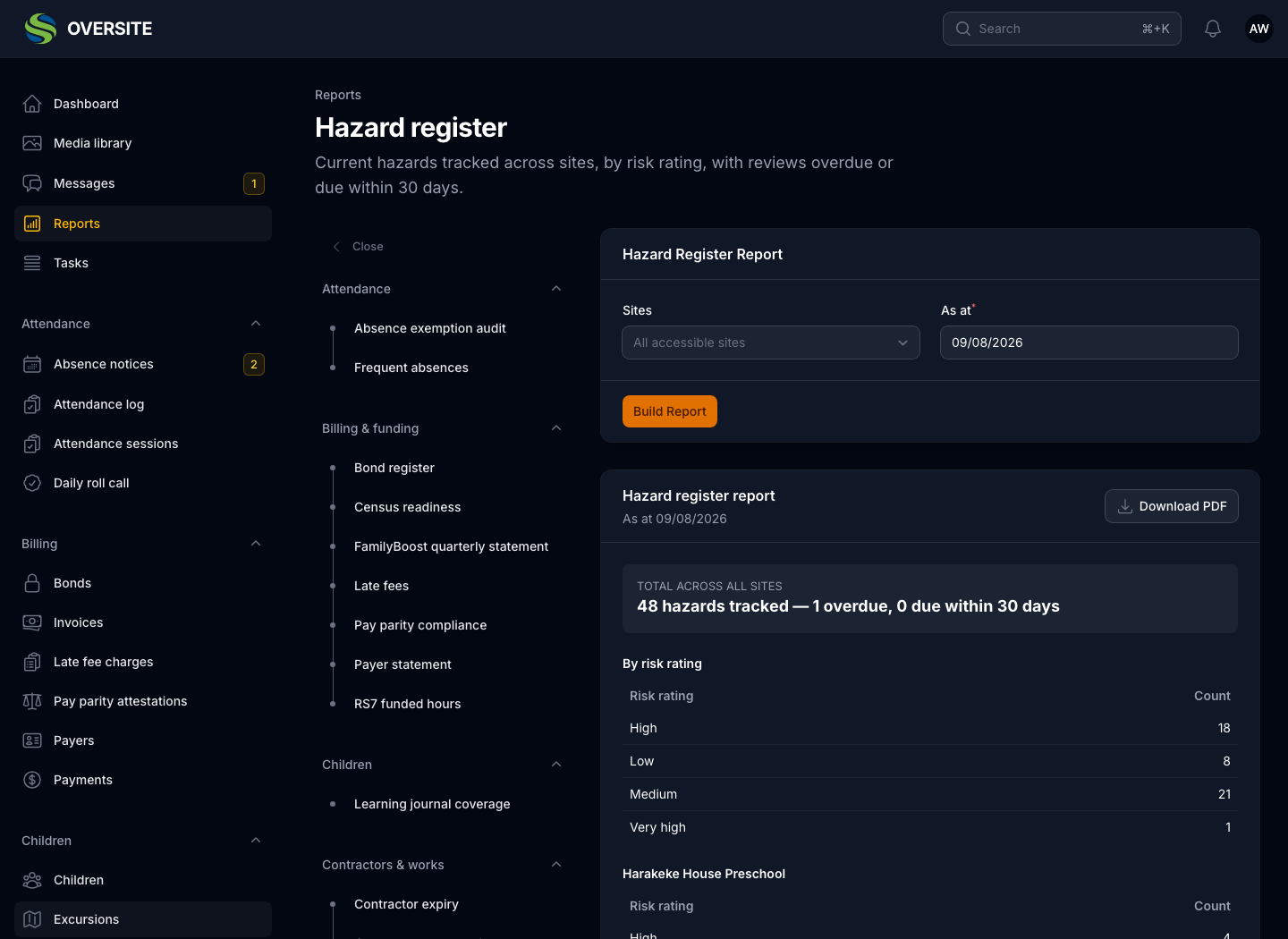
Each hazard carries the harm it could cause and the controls you have in place against it, rather than only a name and a rating. That is the part an auditor asks to see, and the part that is hardest to reconstruct afterwards.

A register is only worth keeping if something tells you when a review has lapsed, so each one has its own review date and the ones that have gone past are flagged rather than left to be noticed. Contractors introduce hazards too: anything raised during a site induction lands in the same register as the ones you already knew about.

  • Permanent, temporary and contractor-introduced held separately
  • Risk rating from likelihood against impact
  • The harm, and the controls against each one
  • Review dates tracked, with overdue surfaced
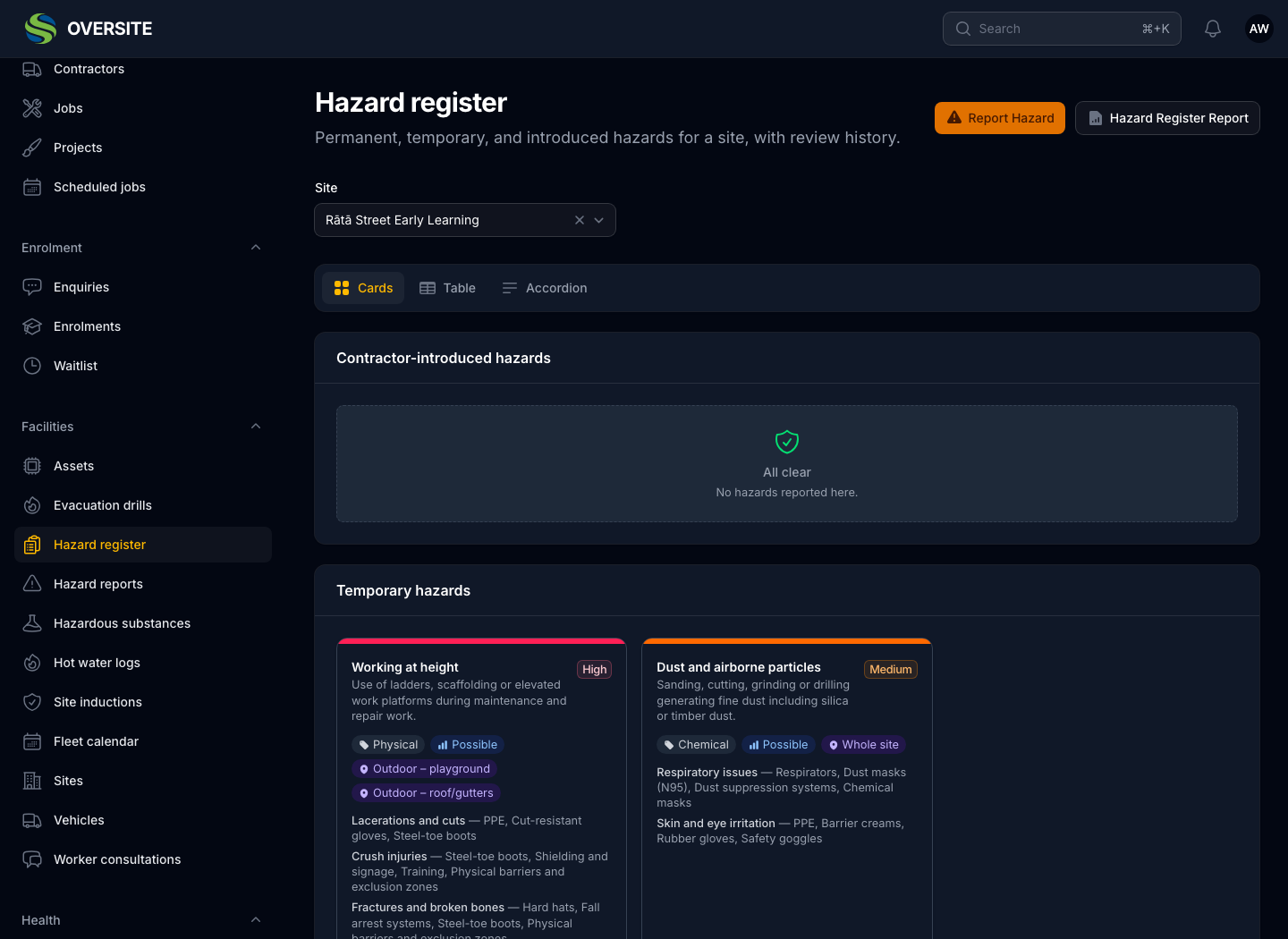
The Hazard register in dark mode for one site, with permanent, temporary and contractor-introduced hazards in separate sections. Each hazard is a card showing its risk rating, type, locations, the harm it could cause and the controls in place, with its review date and history. The Hazard register report in dark mode, showing 48 hazards tracked across all sites with one overdue for review, broken down by risk rating into high, medium, low and very high, then repeated per centre.

Incidents recorded properly, once

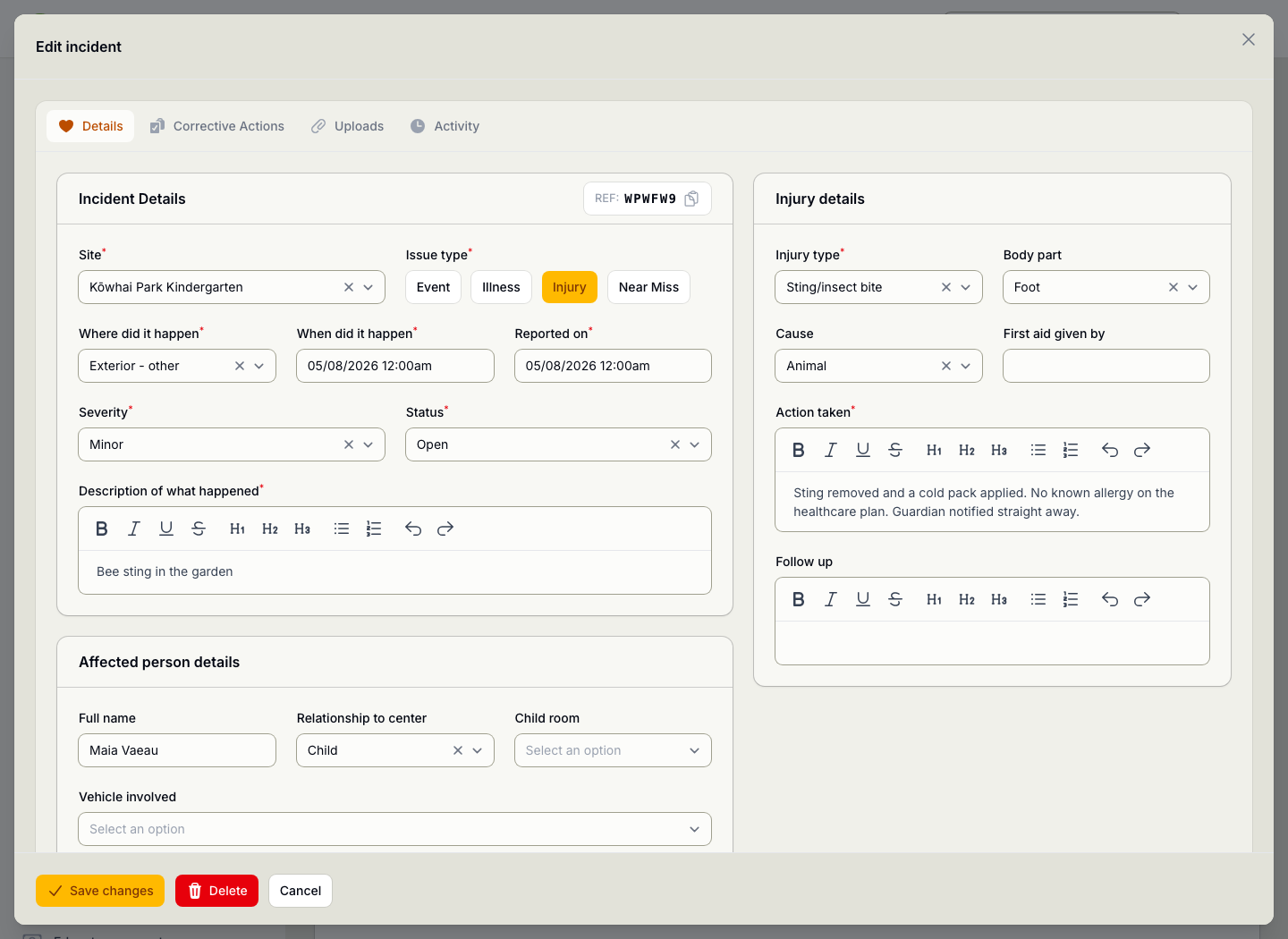
Most of what goes in an incident register is minor and ordinary, a grazed knee or a bumped head. What matters is that the record is complete at the time, because that is the one thing nobody can go back and fix later.

If something is notifiable to WorkSafe or the Ministry, the record says so and tracks whether the notification was made.

  • Injury, illness and event types with their own fields
  • Body part, cause, area and severity recorded
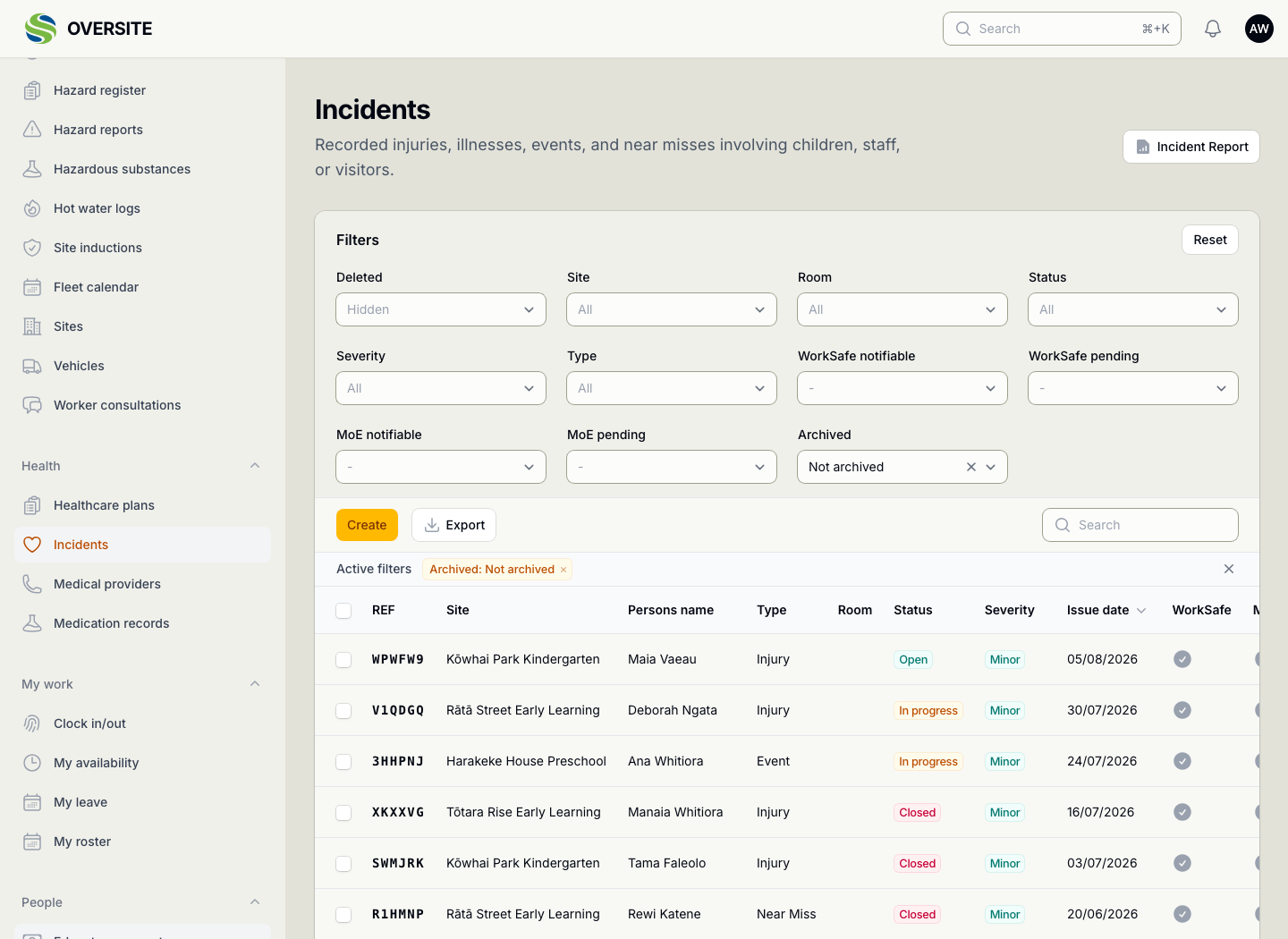
  • WorkSafe and Ministry notifiability flagged
  • Guardian signature captured where one is needed
An incident record open for editing, showing the affected person, the date, where it happened, the body part, severity and the action taken. The Incidents list showing incidents across the centres with their reference, type, the person involved, the date, severity, status and whether they are notifiable.

Drills, checks and the rest of the evidence

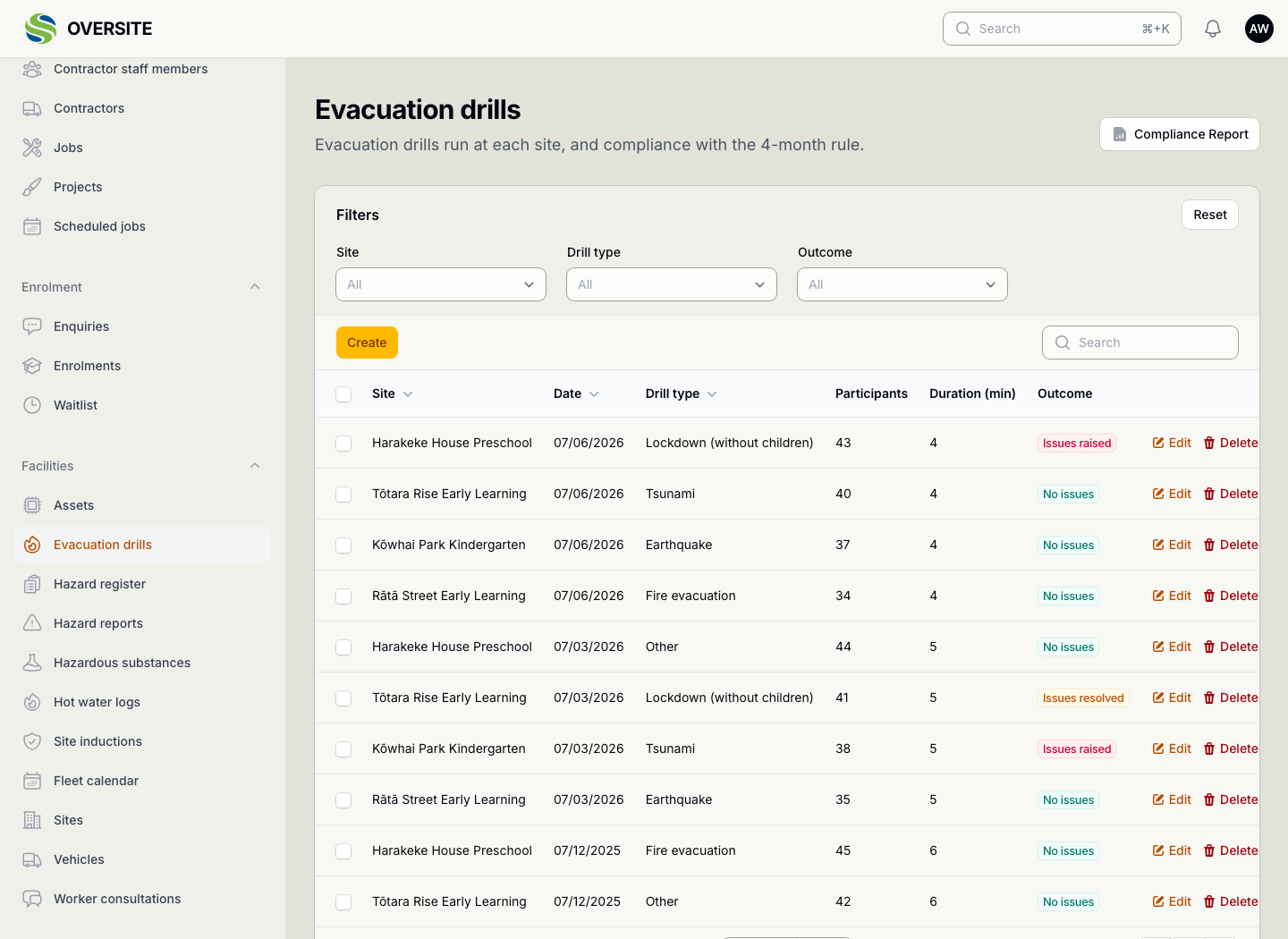
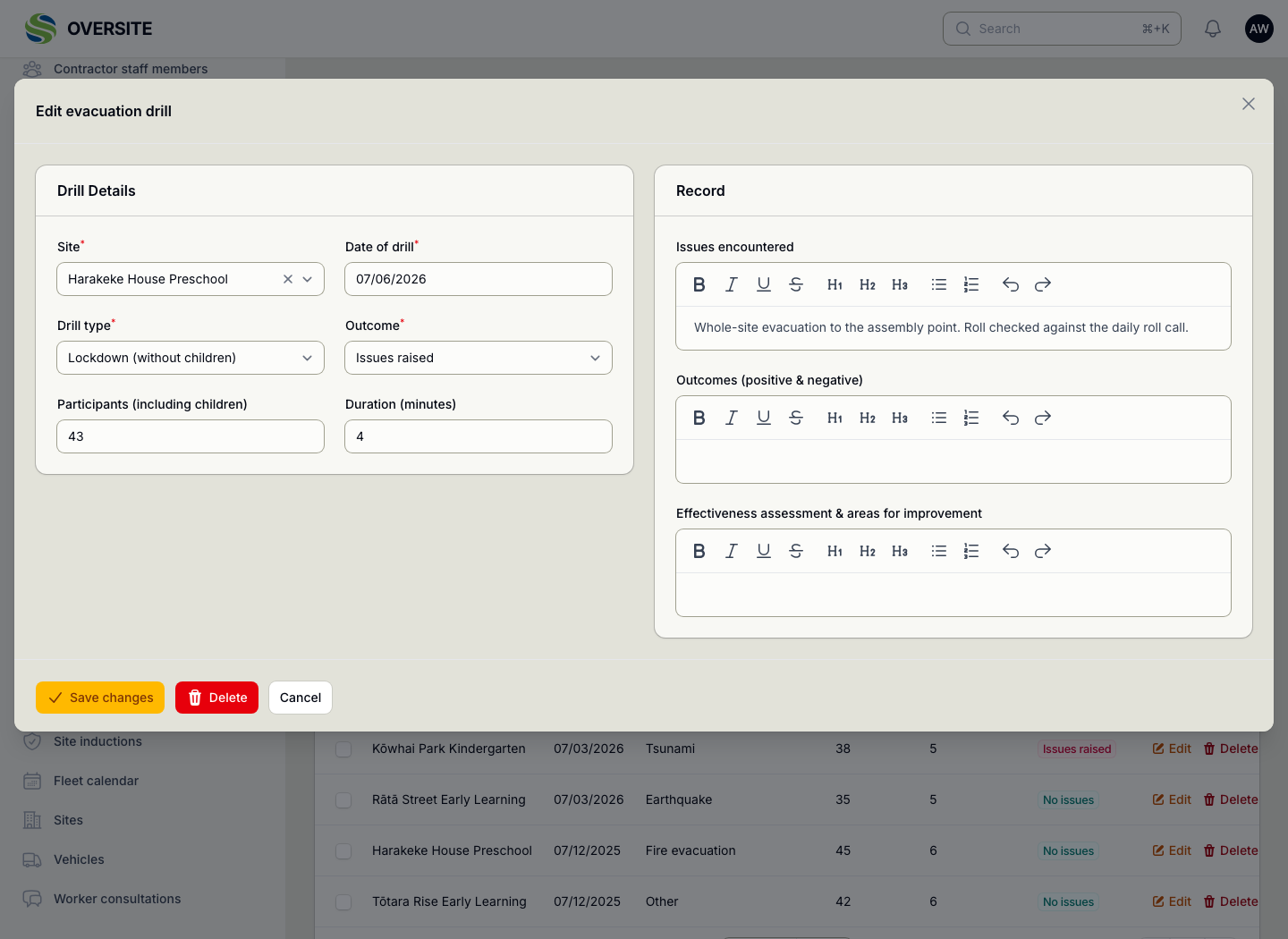
Regulation 28 expects drills held and recorded. One entry does not demonstrate that. The pattern over the year does, so the register keeps them all with participants, duration and how it went.

The reports pull it together across every site, so a board paper or an ERO conversation starts from a figure rather than a folder.

  • Evacuation drills logged with participants and duration
  • Hazardous substances held against their classification
  • Hot water checks and other recurring logs
  • Worker consultations recorded, as HSWA expects
The Evacuation drills list showing drills held at each centre with the date, the drill type, the outcome, how many took part and how long it took. An evacuation drill open for editing, showing the site, the date it was held, the drill type and outcome, the number of participants, how many minutes it took and the notes recorded at the time.

See it with your own setup

Tell us how many sites you run and what you're using now, and we'll show you the parts that matter most to you. No obligation, and you'll hear back within one working day.

Book a demo