Why Oversite
What we cover Case study Security & data Procurement Moving across Support Roadmap Book a demoChildren & families
Enrolments & attendance Enquiry to roll call, one record The guardian portal Journal, invoices and consents Learning & records Te Whāriki entries, media library Daily care Sleep, nappies, absences, excursions Health & medical Plans, medication, allergies Home-based services Schedule 1A, educators, coordinatorsCompliance & safety
Ratios & funding Schedule 2, RS7, ECE Census Hazards & incidents Registers, drills, HSWA evidence Governance & quality ERO cycles, consultation, checklists Reports 72 built in, across thirteen areas Automation & setup 26 daily checks, your wordingRunning the organisation
Staff & rosters Records, pay parity, costed rosters Hiring & recruitment Vacancies, careers page, safety checks Billing & payments Invoices, bonds, late fees Property & assets Sites, equipment, fleet Contractors & works Jobs, projects, vetting Portals & kiosks Sign-in tablets for every door Seeing your day Dashboard, tasks, messagesWhat it covers
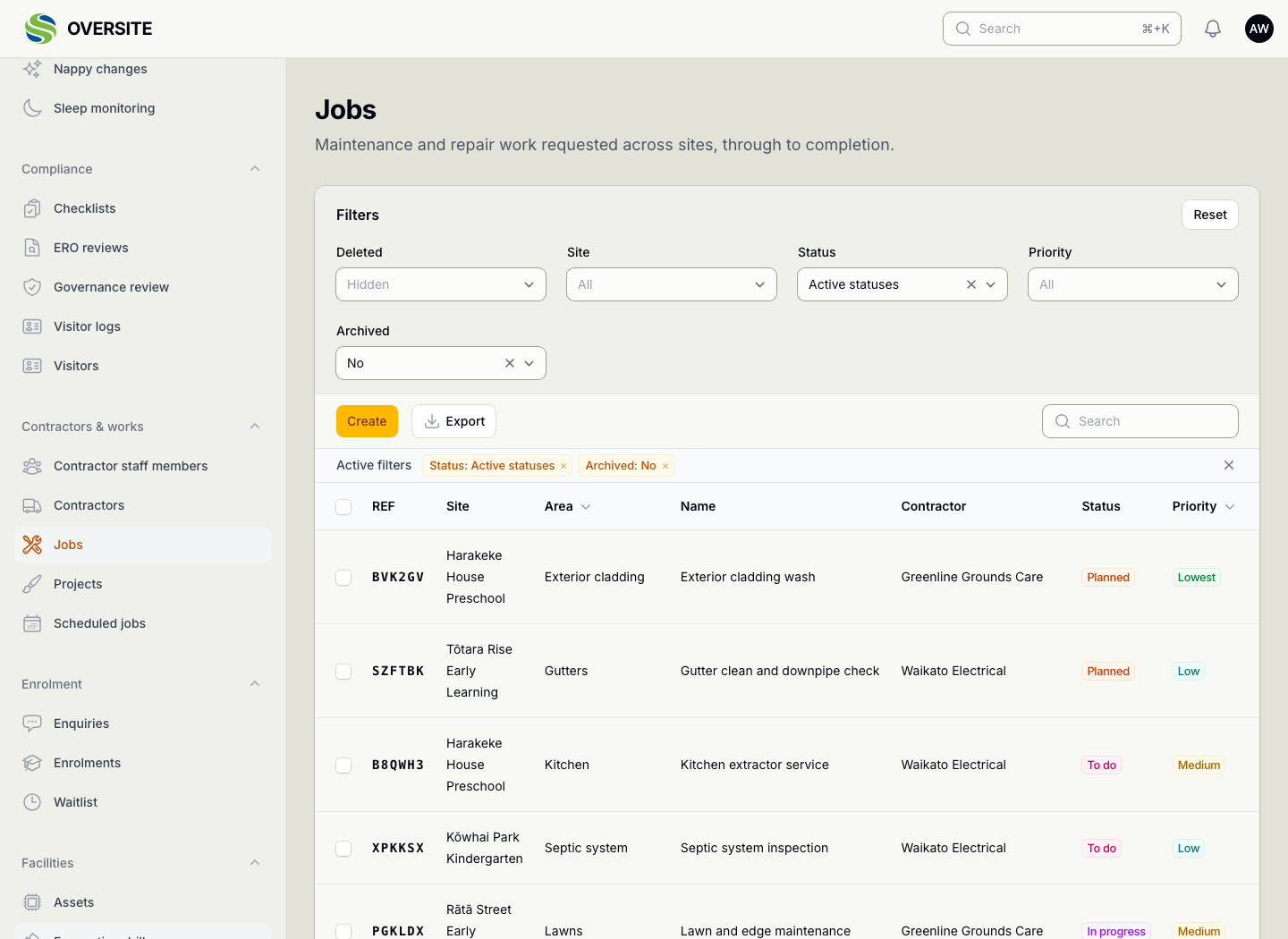
Maintenance and building work happens on sites where children are. Knowing which company is coming, which of their people are vetted, and what they were told at induction is part of the job, so it lives in the same system as everything else.
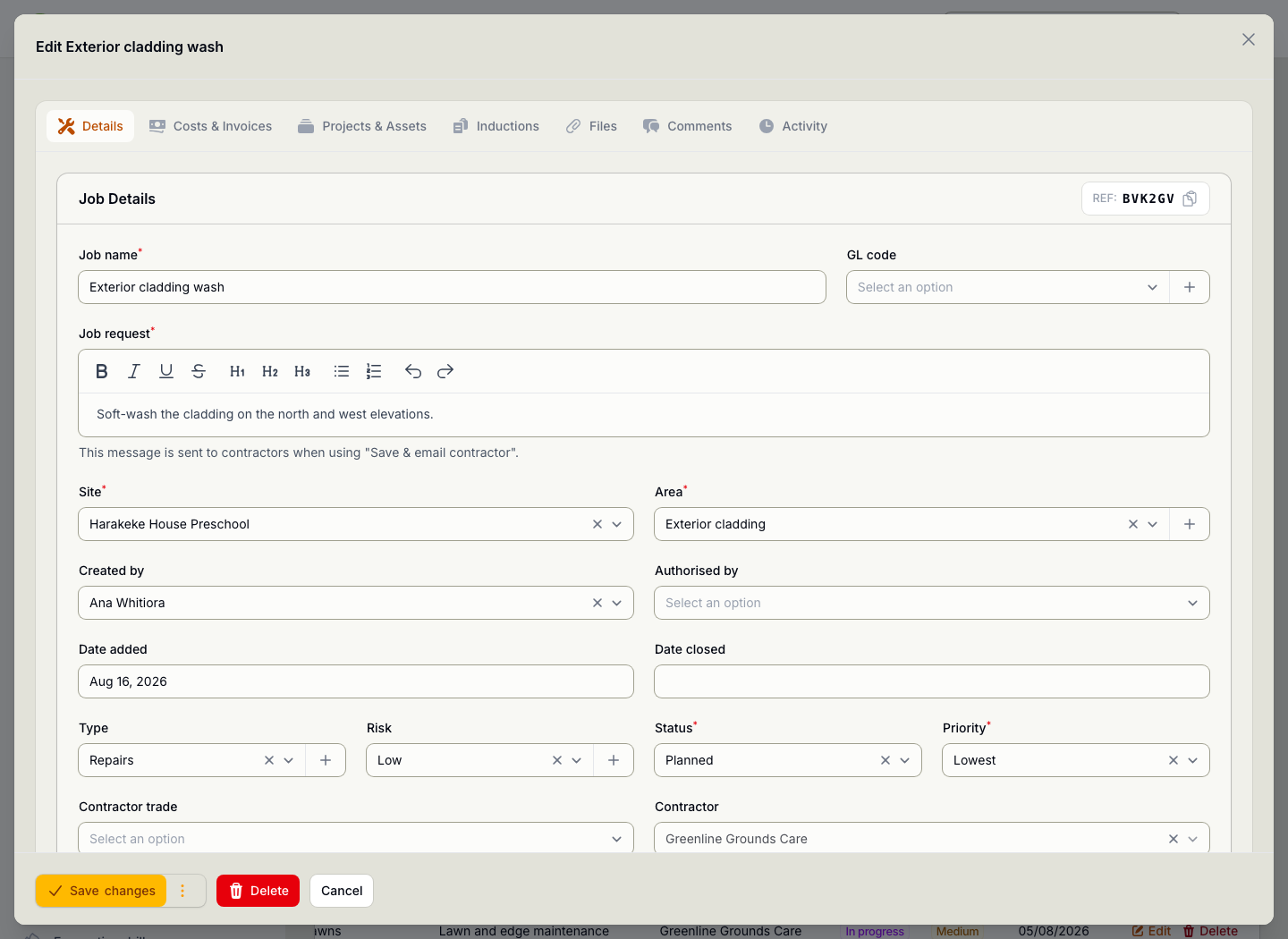
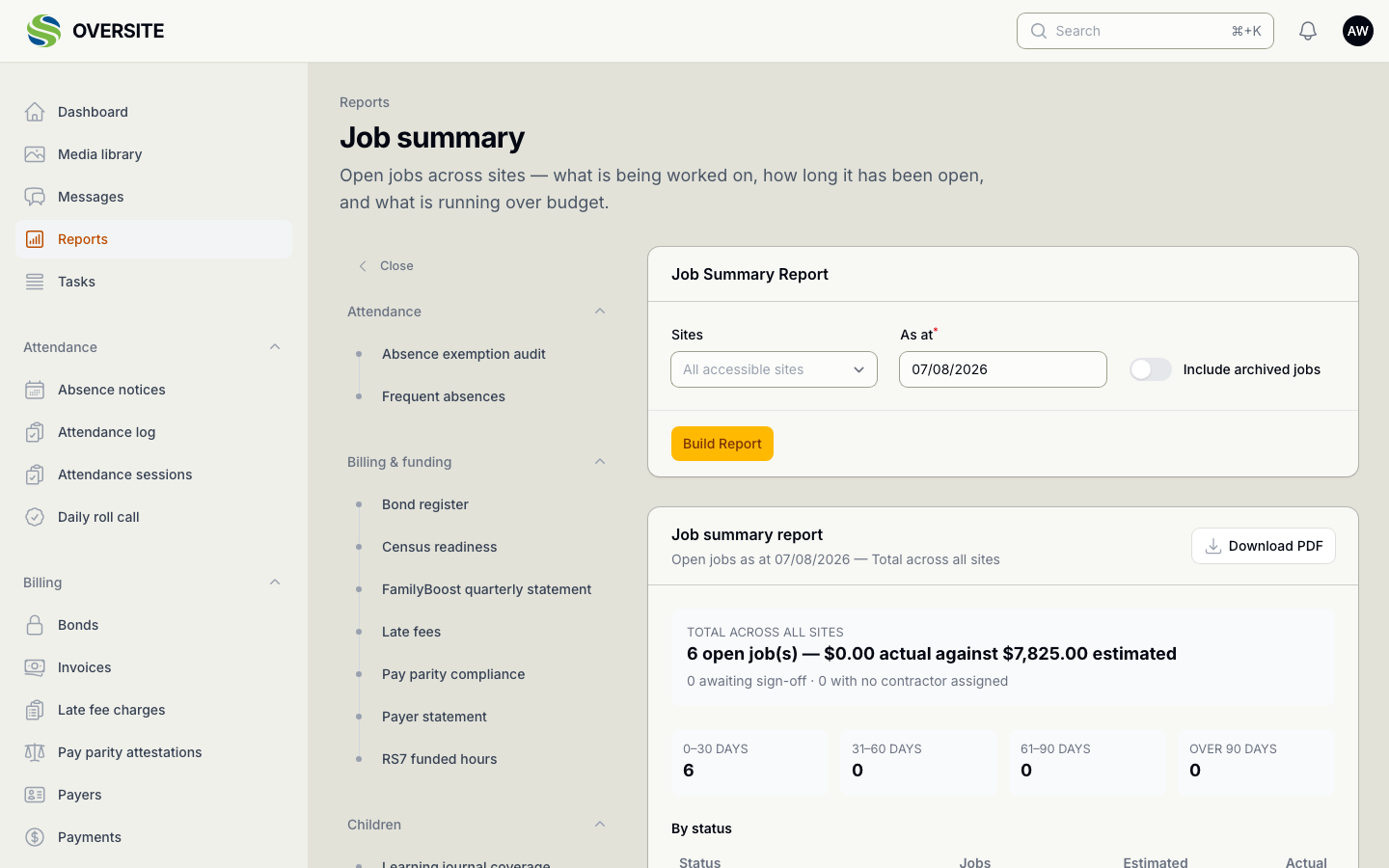
Jobs run from the first quote through to sign-off, with the estimate sitting next to what it cost. That makes the annual maintenance conversation a report rather than a reconstruction.
Recurring work such as the six-monthly RCD test or the annual heat pump service is scheduled rather than remembered.
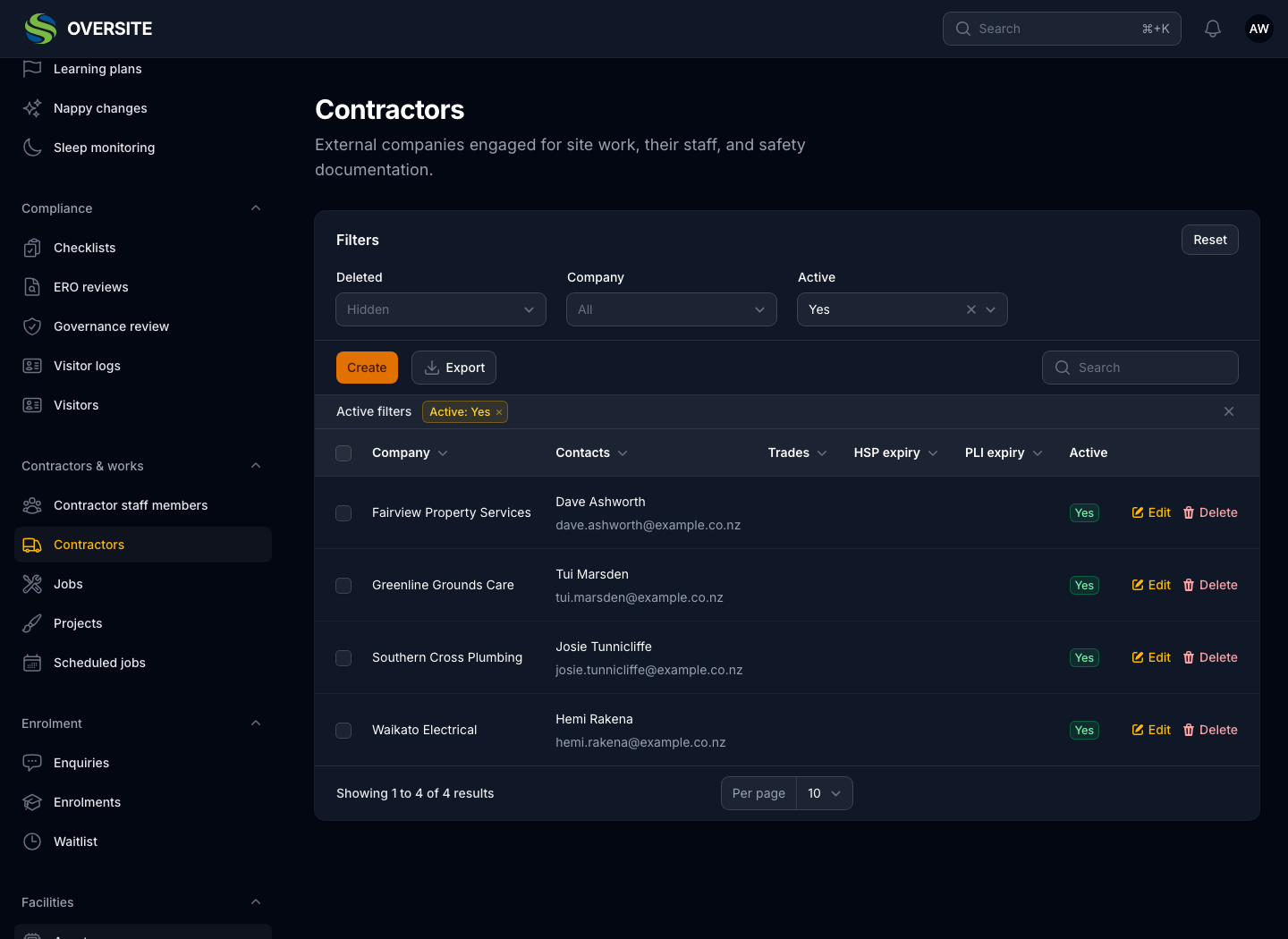
A contractor record holds the paperwork you would otherwise be chasing by email: insurance, health and safety documentation, and when each expires.
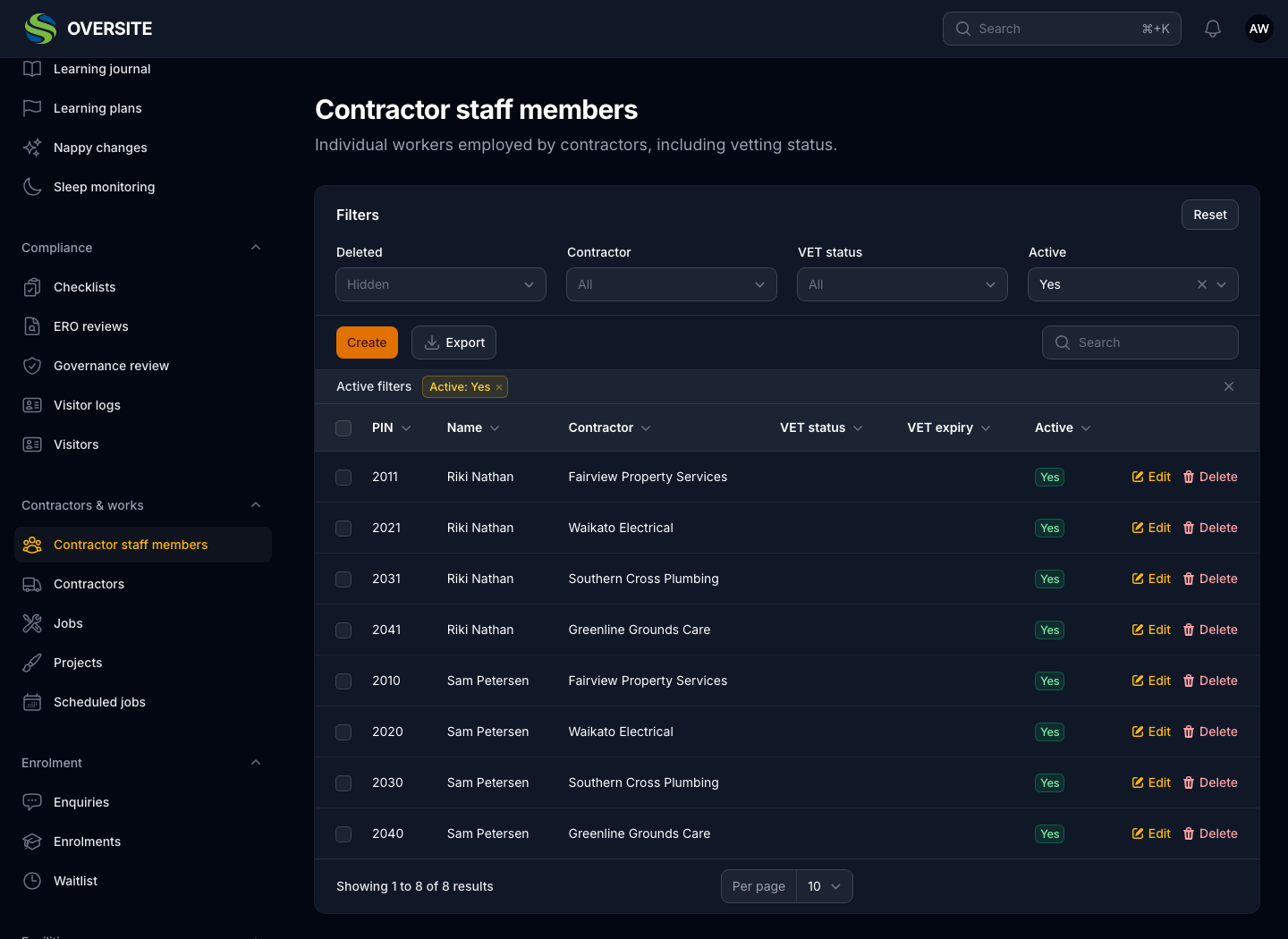
Their individual workers are recorded too, each with their own vetting status, because the question that matters on the day is whether this person is cleared to be here rather than whether their employer is.
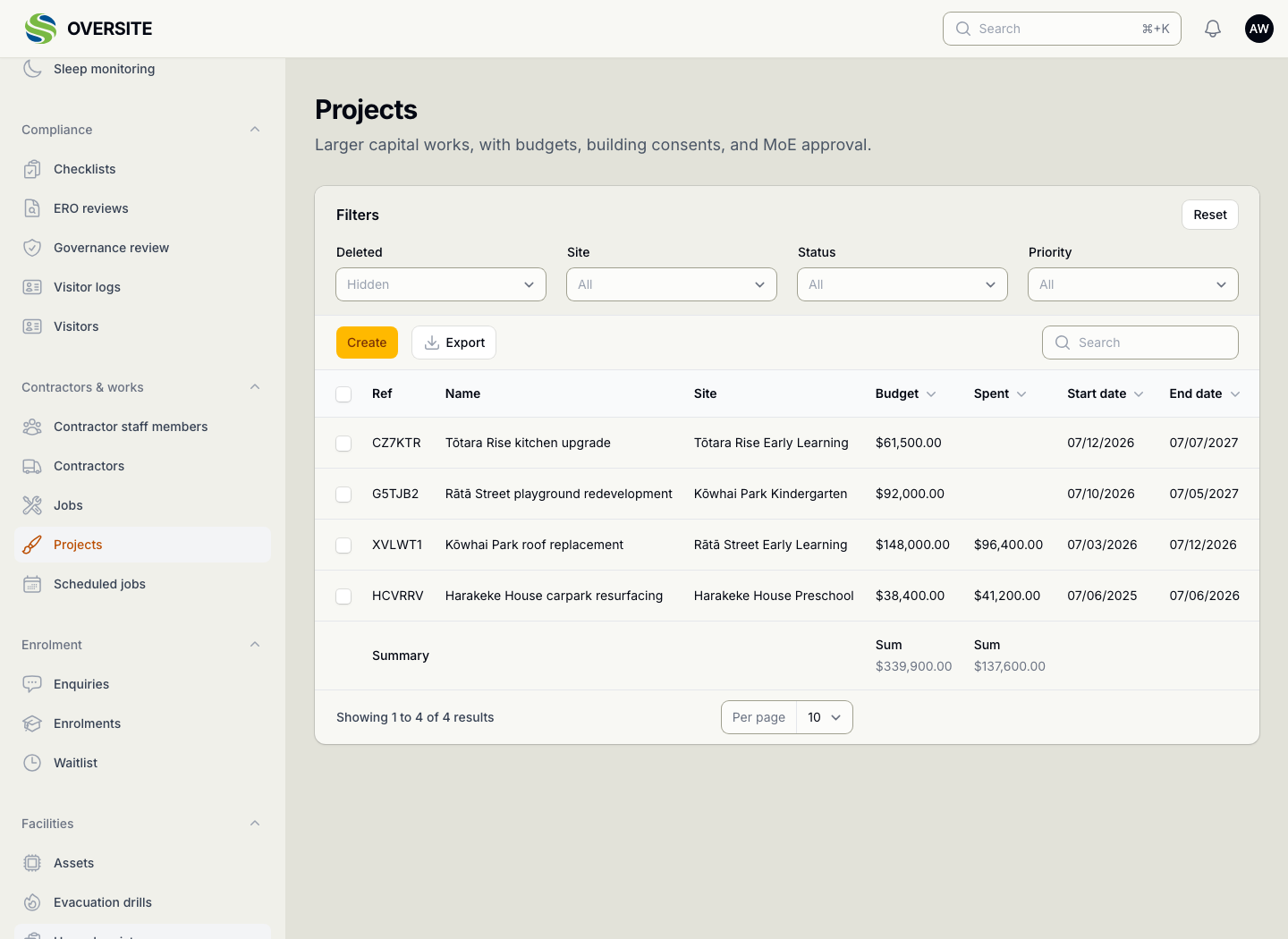
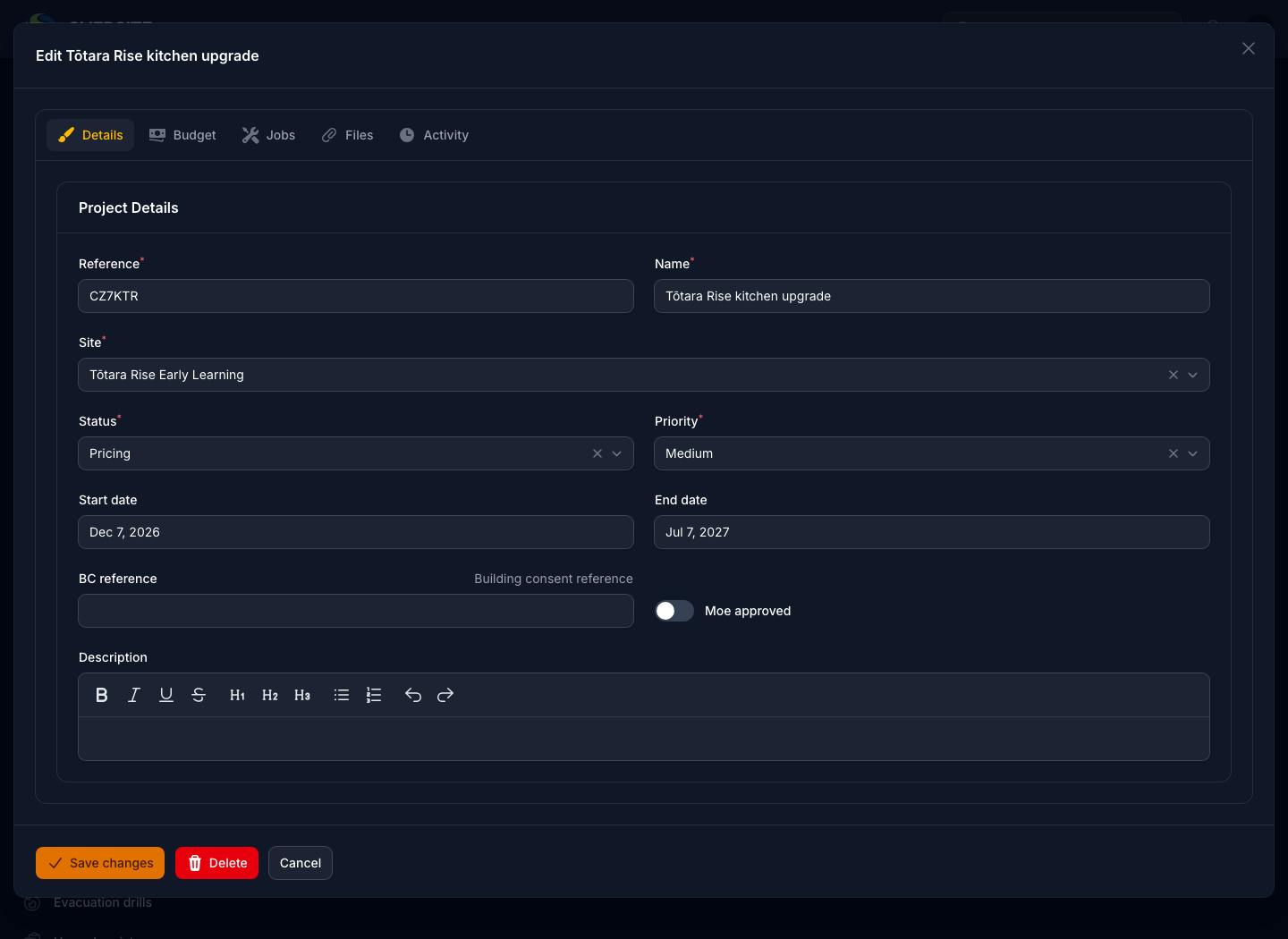
A roof replacement is not a job. It is a budget, an approval, a build window and a dozen jobs underneath it. Projects hold that shape, so capital work is planned and reported on rather than tracked in a spreadsheet beside everything else.
Budget sits next to actual spend from the start, which is the number a board asks for and the one that is hardest to assemble after the fact.
The reports answer the questions a board asks: what is still open, how long has it been open, what did we spend, and who is turning up.
Tell us how many sites you run and what you're using now, and we'll show you the parts that matter most to you. No obligation, and you'll hear back within one working day.
Book a demo