Why Oversite
What we cover Case study Security & data Procurement Moving across Support Roadmap Book a demoChildren & families
Enrolments & attendance Enquiry to roll call, one record The guardian portal Journal, invoices and consents Learning & records Te Whāriki entries, media library Daily care Sleep, nappies, absences, excursions Health & medical Plans, medication, allergies Home-based services Schedule 1A, educators, coordinatorsCompliance & safety
Ratios & funding Schedule 2, RS7, ECE Census Hazards & incidents Registers, drills, HSWA evidence Governance & quality ERO cycles, consultation, checklists Reports 72 built in, across thirteen areas Automation & setup 26 daily checks, your wordingRunning the organisation
Staff & rosters Records, pay parity, costed rosters Hiring & recruitment Vacancies, careers page, safety checks Billing & payments Invoices, bonds, late fees Property & assets Sites, equipment, fleet Contractors & works Jobs, projects, vetting Portals & kiosks Sign-in tablets for every door Seeing your day Dashboard, tasks, messagesWhat it covers
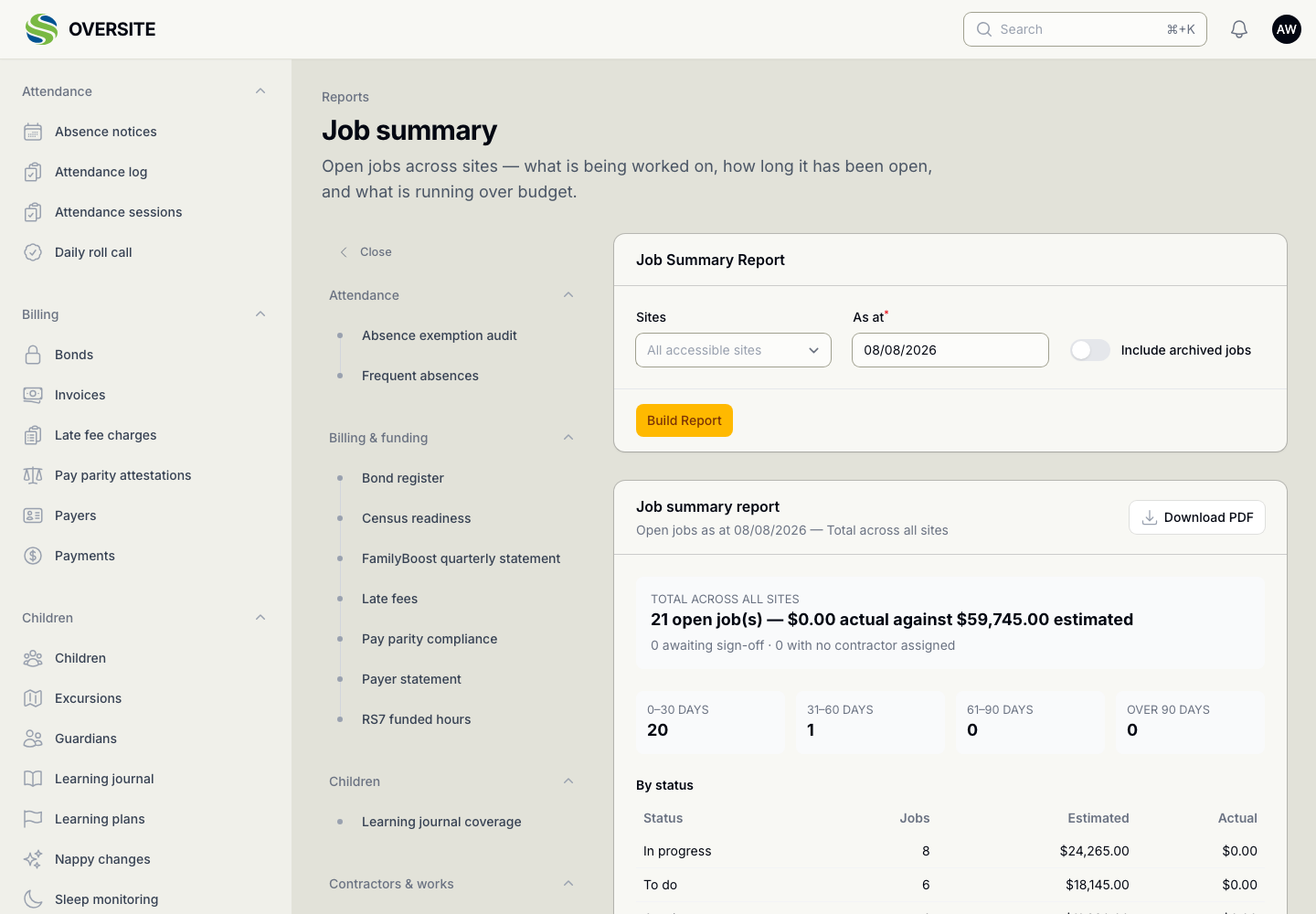
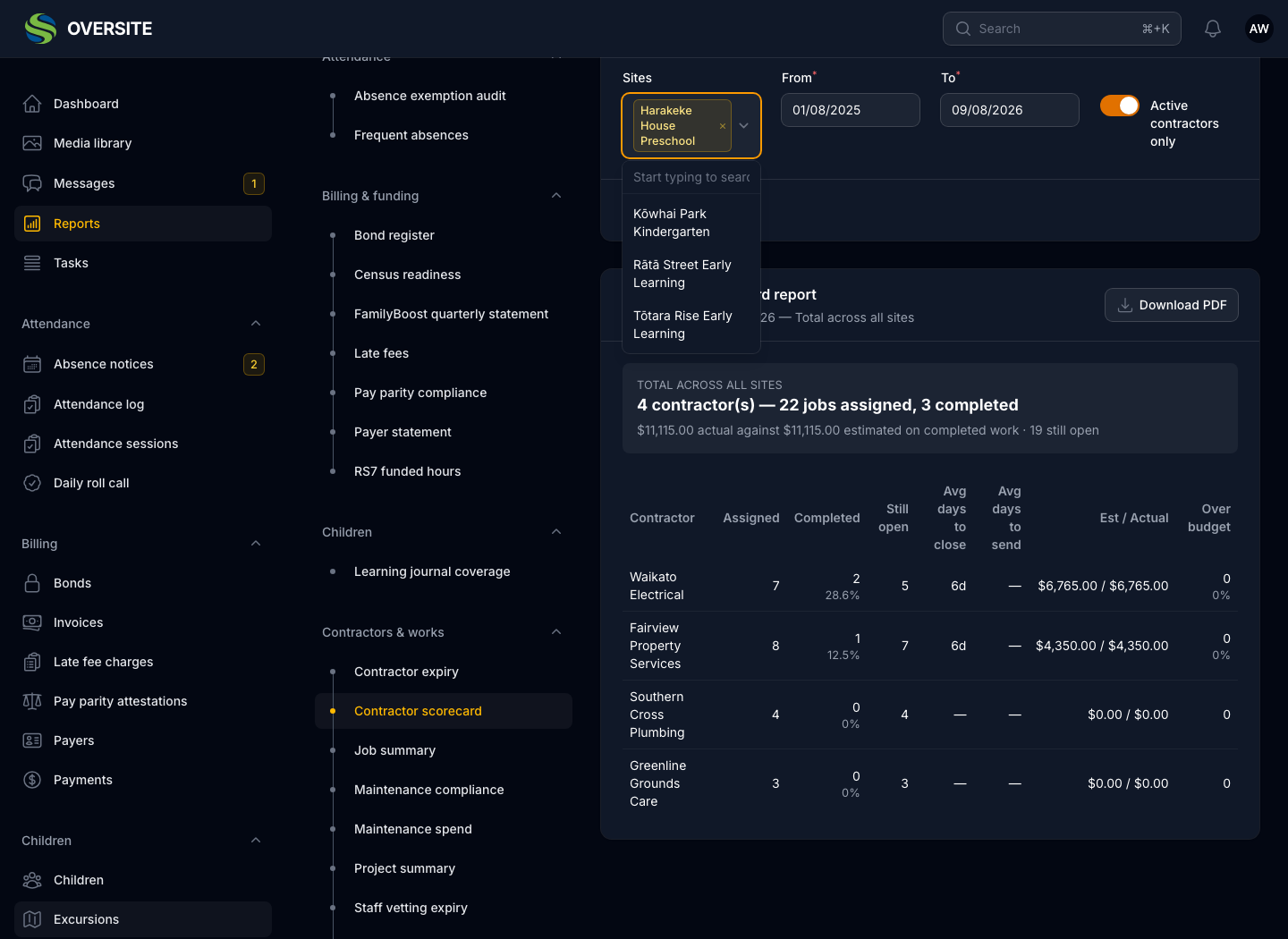
Every module reports on itself. Seventy-two built-in reports across thirteen areas of the organisation, each scoped to the sites you can see, built from records you already keep, and reproducible as at any date you choose.
The catalogue is grouped by the part of the organisation it belongs to rather than alphabetically, so finding the right report doesn't depend on remembering its name.
Each one carries its own permission. Somebody who should see attendance figures doesn't automatically see payroll ones, and cost-bearing reports are gated separately again.
Every one is built in. There is nothing here you configure, buy or wait for.
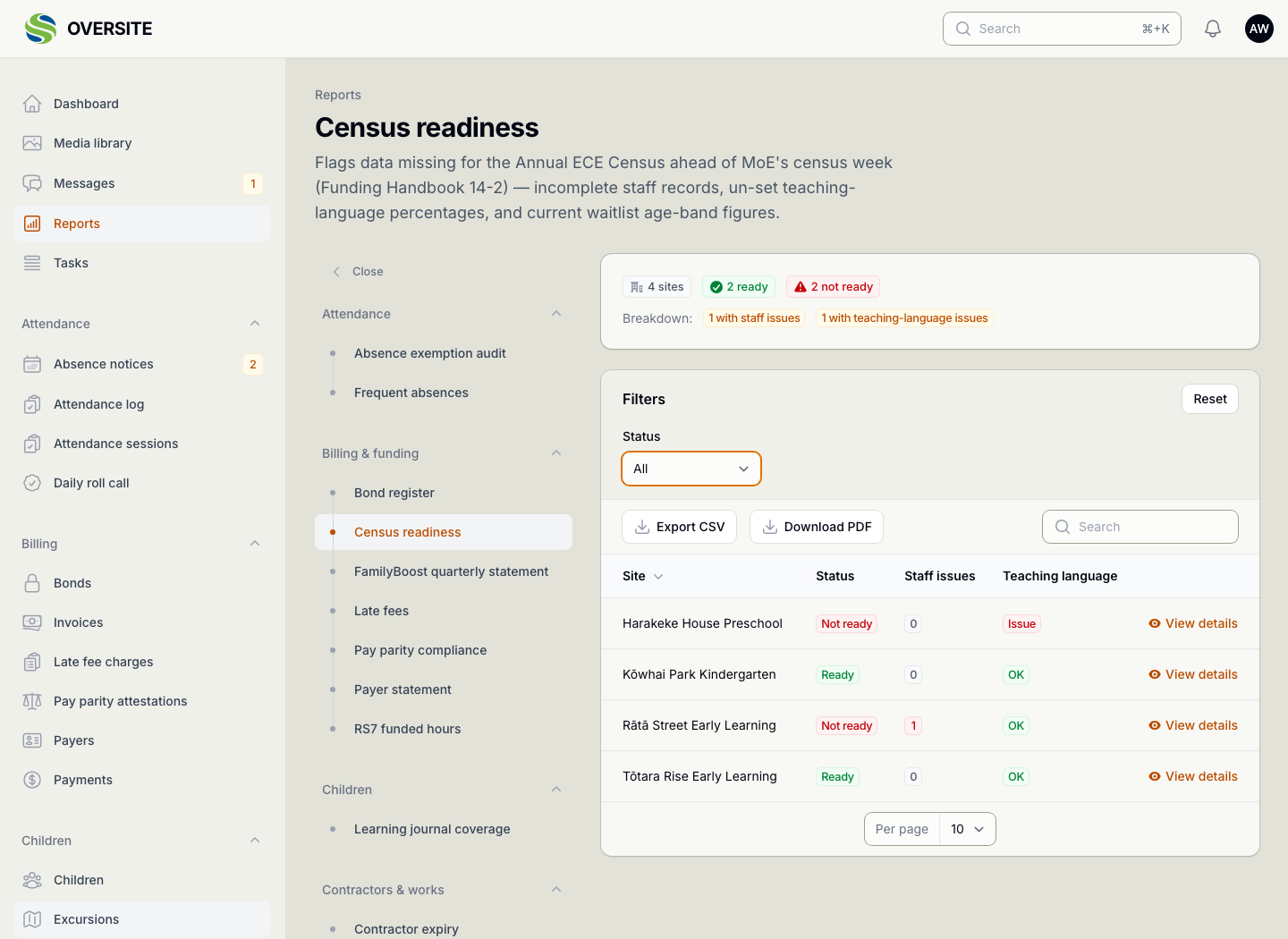
The funding and compliance reports exist because somebody outside the organisation asks for those exact figures on a schedule. They are built to match what is asked for, not to be a generic query tool pointed at the same data and left to you to shape.
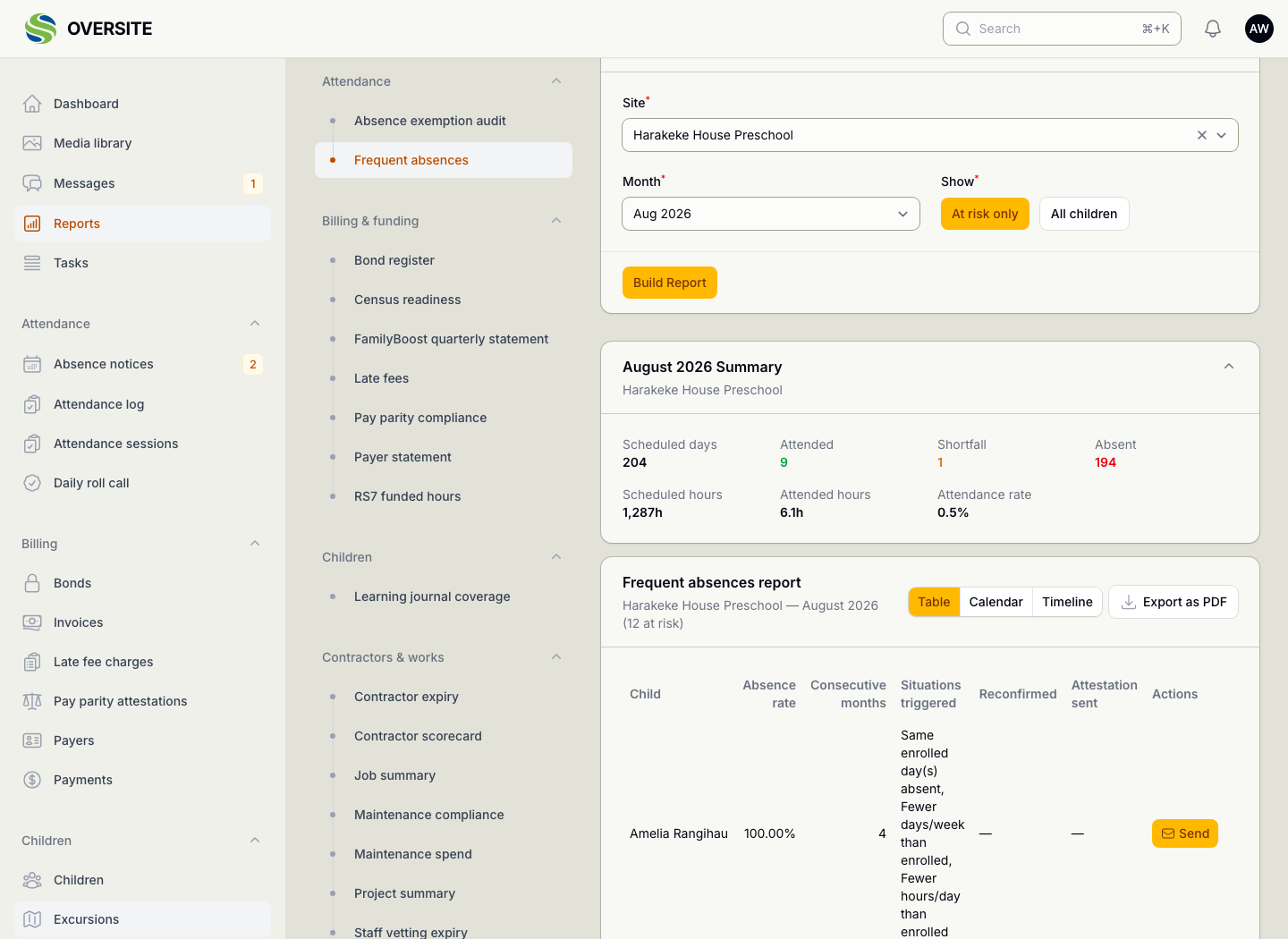
Where a report finds a problem it names the site and the record. A count on its own just moves the search somewhere else.
Every report runs as at a date, which means a figure you quoted in March can be produced again in September and come out the same. That is what makes a report useful in an audit rather than merely interesting on the day.
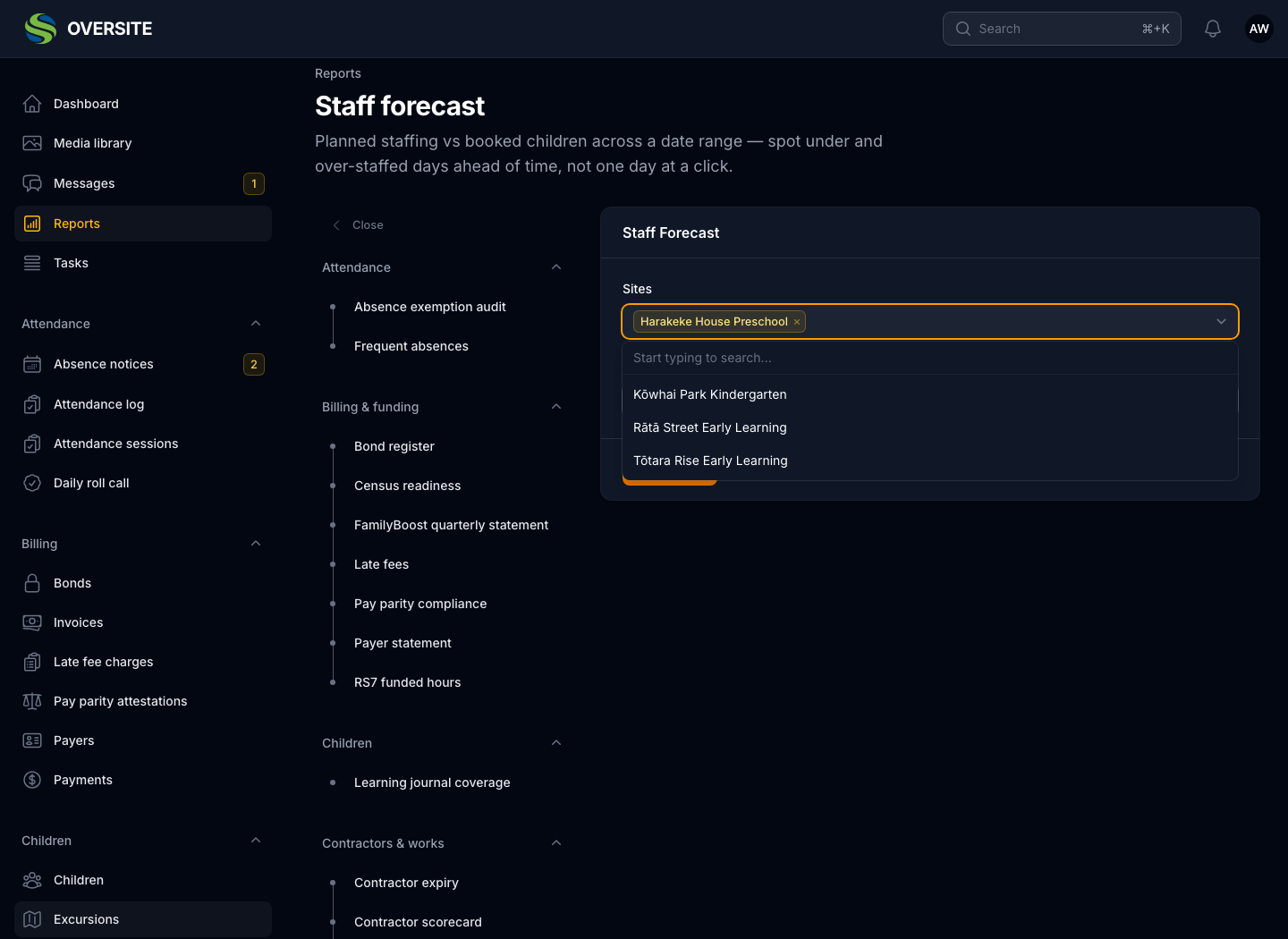
Several look forward rather than back: which certificates lapse next term, which warrants expire, whether the roster covers what you expect to need. That is the difference between a report that records a problem and one that prevents it.
Tell us how many sites you run and what you're using now, and we'll show you the parts that matter most to you. No obligation, and you'll hear back within one working day.
Book a demo